


 Operation and Maintenance
Linux Operation and Maintenance
What is the difference between unix and linux
Operation and Maintenance
Linux Operation and Maintenance
What is the difference between unix and linux
What is the difference between unix and linux

The difference between unix and linux: 1. UNIX is commercial, while Linux is open source, free and open source code; 2. Most UNIX systems are matched with hardware, which means that they cannot be installed on x86 servers and personal computers, while Linux can run on a variety of hardware platforms.
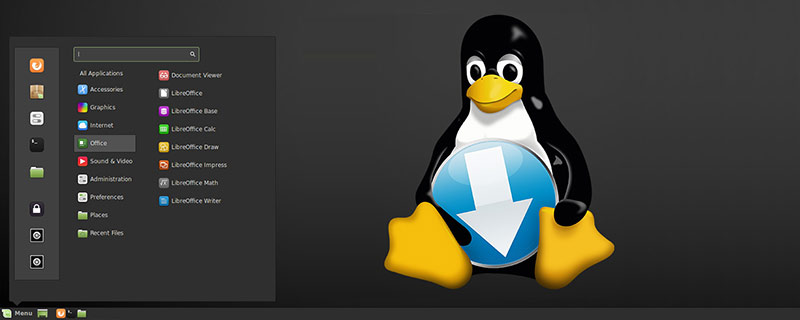
The operating environment of this tutorial: linux7.3 system, DELL G3 computer.
The difference between unix and linux:
1. Open source situation
UNIX is commercial, while Linux is open source Yes, it is free and open source.
2. Hardware Applicability
Most UNIX systems are matched with hardware. That is to say, most UNIX systems such as AIX, HP-UX, etc. cannot be installed on x86 servers and personal computers, while Linux can run on a variety of hardware platforms.
You can learn linux first and then unix, because linux can be easily run on a virtual machine to prevent misoperation by novices. As for the distribution version, you can choose Ubuntu, Linux Mint, etc.
Extended information:
The birth of unix
In 1965, Bell Labs joined a project led by General Electric A plan in cooperation with the Massachusetts Institute of Technology (MIT); the plan is to build a multi-user, multi-tasking, multi-level (multi-user, multi-processor, multi-level) MULTICS operating system.
Until 1969, the MULTICS project was stopped because the work progress was too slow. At that time, Ken Thompson (later known as the father of UNIX) already had a program called "Star Trek" running on the GE-635 machine, but the response was very slow. He happened to discover an idle PDP- 7 (Digital's host),
Ken Thompson and Dernis Ritchie transplanted the "Star Trek" program to the PDP-7. And this PDP-7 (shown in Figure 1-1) has left its name in the entire history of computers.
MULTICS is actually the abbreviation of "Multiplexed Information and Computing Service". In 1970, the PDP-7 could only support two users. At that time, Brian Kernighan jokingly said that their system actually It is:
"UNiplexed Information and Computing Service", abbreviated as "UNICS". Later, everyone took its homophony and called it "UNIX". 1970 can be called "the first year of UNIX".
Basic ideas of Linux
The basic ideas of Linux have two points: first, everything is a file; second, every software has a certain purpose. The first one is that everything in the system is boiled down to a file, including commands, hardware and software devices, operating systems, processes, etc. For the operating system kernel, they are all regarded as files with their own characteristics or types. .
As for the fact that Linux is based on Unix, it is largely because the basic ideas of the two are very similar.
Completely free
Linux is a free operating system that users can obtain for free through the Internet or other channels, and can modify its source code at will. This is something other operating systems cannot do.
It is precisely because of this that countless programmers from all over the world have participated in the modification and writing of Linux. Programmers can change it according to their own interests and inspirations, which has allowed Linux to absorb countless programmers. The essence of the company continues to grow.
Fully compatible with POSIX1.0 standard
This makes it possible to run common DOS and Windows programs through corresponding emulators under Linux. This lays the foundation for users to switch from Windows to Linux.
When many users consider using Linux, they think about whether programs that were commonly used under Windows can run normally. This eliminates their doubts.
Multi-user, multi-tasking
Linux supports multiple users. Each user has its own special rights for its own file device, ensuring that users do not affect each other. Multitasking is one of the most important features of today's computers. Linux can enable multiple programs to run simultaneously and independently.
Related learning recommendations: linux video tutorial
The above is the detailed content of What is the difference between unix and linux. For more information, please follow other related articles on the PHP Chinese website!

Hot AI Tools

Undress AI Tool
Undress images for free

Undresser.AI Undress
AI-powered app for creating realistic nude photos

AI Clothes Remover
Online AI tool for removing clothes from photos.

Clothoff.io
AI clothes remover

Video Face Swap
Swap faces in any video effortlessly with our completely free AI face swap tool!

Hot Article
Hot Tools

Notepad++7.3.1
Easy-to-use and free code editor

SublimeText3 Chinese version
Chinese version, very easy to use

Zend Studio 13.0.1
Powerful PHP integrated development environment

Dreamweaver CS6
Visual web development tools

SublimeText3 Mac version
God-level code editing software (SublimeText3)


 How to install software on Linux using the terminal?
Aug 02, 2025 pm 12:58 PM
How to install software on Linux using the terminal?
Aug 02, 2025 pm 12:58 PM
There are three main ways to install software on Linux: 1. Use a package manager, such as apt, dnf or pacman, and then execute the install command after updating the source, such as sudoaptininstallcurl; 2. For .deb or .rpm files, use dpkg or rpm commands to install, and repair dependencies when needed; 3. Use snap or flatpak to install applications across platforms, such as sudosnapinstall software name, which is suitable for users who are pursuing version updates. It is recommended to use the system's own package manager for better compatibility and performance.
 The Ultimate Guide to High-Performance Gaming on Linux
Aug 03, 2025 am 05:51 AM
The Ultimate Guide to High-Performance Gaming on Linux
Aug 03, 2025 am 05:51 AM
ChoosePop!_OS,Ubuntu,NobaraLinux,orArchLinuxforoptimalgamingperformancewithminimaloverhead.2.InstallofficialNVIDIAproprietarydriversforNVIDIAGPUs,ensureup-to-dateMesaandkernelversionsforAMDandIntelGPUs.3.EnabletheperformanceCPUgovernor,usealow-latenc
 What are the main pros and cons of Linux vs. Windows?
Aug 03, 2025 am 02:56 AM
What are the main pros and cons of Linux vs. Windows?
Aug 03, 2025 am 02:56 AM
Linux is suitable for old hardware, has high security and is customizable, but has weak software compatibility; Windows software is rich and easy to use, but has high resource utilization. 1. In terms of performance, Linux is lightweight and efficient, suitable for old devices; Windows has high hardware requirements. 2. In terms of software, Windows has wider compatibility, especially professional tools and games; Linux needs to use tools to run some software. 3. In terms of security, Linux permission management is stricter and updates are convenient; although Windows is protected, it is still vulnerable to attacks. 4. In terms of difficulty of use, the Linux learning curve is steep; Windows operation is intuitive. Choose according to requirements: choose Linux with performance and security, and choose Windows with compatibility and ease of use.
 Understanding RAID Configurations on a Linux Server
Aug 05, 2025 am 11:50 AM
Understanding RAID Configurations on a Linux Server
Aug 05, 2025 am 11:50 AM
RAIDimprovesstorageperformanceandreliabilityonLinuxserversthroughvariousconfigurations;RAID0offersspeedbutnoredundancy;RAID1providesmirroringforcriticaldatawith50�pacityloss;RAID5supportssingle-drivefailuretoleranceusingparityandrequiresatleastthre
 Linux how to enable and disable services at boot
Aug 08, 2025 am 10:23 AM
Linux how to enable and disable services at boot
Aug 08, 2025 am 10:23 AM
To manage the startup of Linux services, use the systemctl command. 1. Check the service status: systemctlstatus can check whether the service is running, enabled or disabled. 2. Enable the service startup: sudosystemctlenable, such as sudosystemctlenablenginx. If it is started at the same time, use sudosystemctlenable--nownginx. 3. Disable the service startup: sudosystemctldisable, such as sudosystemctldisablecups. If it is stopped at the same time, use sudosystemctldisabl
 Linux how to list all running processes
Aug 08, 2025 am 06:42 AM
Linux how to list all running processes
Aug 08, 2025 am 06:42 AM
Usepsauxforacompletesnapshotofallrunningprocesses,showingdetailedinformationlikeUSER,PID,CPU,andmemoryusage.2.Usetoporhtopforreal-timemonitoringofprocesseswithdynamicupdates,wherehtopoffersamoreintuitiveinterface.3.UsepgreporpidoftoquicklyfindthePIDs
 How to clean up your Linux system
Aug 22, 2025 am 07:42 AM
How to clean up your Linux system
Aug 22, 2025 am 07:42 AM
Removeunusedpackagesanddependencieswithsudoaptautoremove,cleanpackagecacheusingsudoaptcleanorautoclean,andremoveoldkernelsviasudoaptautoremove--purge.2.Clearsystemlogswithsudojournalctl--vacuum-time=7d,deletearchivedlogsin/var/log,andempty/tmpand/var
 Linux how to view the contents of a file
Aug 19, 2025 pm 06:44 PM
Linux how to view the contents of a file
Aug 19, 2025 pm 06:44 PM
ToviewfilecontentsinLinux,usedifferentcommandsbasedonyourneeds:1.Forsmallfiles,usecattodisplaytheentirecontentatonce,withcat-ntoshowlinenumbers.2.Forlargefiles,uselesstoscrollpagebypageorlinebyline,searchwith/search_term,andquitwithq.3.Usemoreforbasi
