


What does undeclared identifier mean in C language?

"undeclared identifier" refers to "undeclared identifier", which is an error message in C language; usually the variable or function used is not defined, or the definition is inconsistent with the calling time. of.

The operating environment of this article: windows7 system, Dell G3 computer, C11.
"undeclared identifier" means "undeclared identifier". It is an error message in C language, indicating that the identifier is not declared, that is, no declared variables, functions, and types are in use.
The cause and solution of undeclared identifier:
The undeclared identifier is mainly caused by the lack of definition and description when using variables. In fact, the compiler does not recognize this identifier.
When programming in C language, if you want to call library functions, you need to include the corresponding header files, such as sin(), cos(), and other mathematical functions. Their header files are math.h. When calling the sin() or cos() function, you need to add #include
Note: In addition to the type of error prompts such as undeclared identifier, C language also has many professional error prompt languages. The problems and solutions targeted by each error reporting language require guidance based on professional knowledge.
Extended information:
C language is a process-oriented, abstract general-purpose programming language. It is widely used in low-level development and can be compiled in a simple way. , dealing with low-level memory.
C language is a process-oriented computer programming language, which is different from object-oriented programming languages such as C and Java.
C language describes problems faster than assembly language, has less workload, good readability, and is easy to debug, modify and transplant, while the code quality is equivalent to assembly language.
Identifier: In programming languages, identifiers are names used by users when programming. Variables, constants, functions, and statement blocks all have names. It is a symbol used to identify an entity and is used to name variable names, function names, labels and other user-defined objects.
C Identifier is the name used to identify a variable, function, or any other user-defined item. An identifier starts with the letters A-Z or a-z or the underscore _, followed by zero or more letters, underscores, and numbers (0-9).
Naming specifications for identifiers in C language:
1. Identifiers consist of letters, numbers, and underscores, and the first letter cannot be a number. (Punctuation characters, such as @, $ and %, are not allowed in C identifiers.)
2. Identifiers are case-sensitive, that is, they are strictly case-sensitive. Generally use lowercase for variable names and uppercase for symbolic constants. (Note: Letters in C language are case-sensitive, so score, Score, and SCORE represent three different identifiers respectively)
3. C keywords cannot be used as user identifiers, for example: if, for, while, etc. (Note: The identifier cannot be the same as a C language keyword, nor can it have the same name as a user-defined function or C language library function. For is OK because it is case-sensitive.) C language keywords (32 5 7)
4. The length of the identifier is determined by the compilation system on the machine. The general limit is 8 characters. (Note: The 8-character length limit is the C89 standard. The C99 standard has expanded the length. In fact, most industrial standards longer).
5. Identifier naming should be such that "the meaning is known by the name", for example, length (foreign language: length), sum, total (foreign language: sum), pi (foreign language: pi)
For more programming-related knowledge, please visit: Programming Teaching! !
The above is the detailed content of What does undeclared identifier mean in C language?. For more information, please follow other related articles on the PHP Chinese website!

Hot AI Tools

Undress AI Tool
Undress images for free

Undresser.AI Undress
AI-powered app for creating realistic nude photos

AI Clothes Remover
Online AI tool for removing clothes from photos.

Clothoff.io
AI clothes remover

Video Face Swap
Swap faces in any video effortlessly with our completely free AI face swap tool!

Hot Article
Hot Tools

Notepad++7.3.1
Easy-to-use and free code editor

SublimeText3 Chinese version
Chinese version, very easy to use

Zend Studio 13.0.1
Powerful PHP integrated development environment

Dreamweaver CS6
Visual web development tools

SublimeText3 Mac version
God-level code editing software (SublimeText3)


 C language data structure: data representation and operation of trees and graphs
Apr 04, 2025 am 11:18 AM
C language data structure: data representation and operation of trees and graphs
Apr 04, 2025 am 11:18 AM
C language data structure: The data representation of the tree and graph is a hierarchical data structure consisting of nodes. Each node contains a data element and a pointer to its child nodes. The binary tree is a special type of tree. Each node has at most two child nodes. The data represents structTreeNode{intdata;structTreeNode*left;structTreeNode*right;}; Operation creates a tree traversal tree (predecision, in-order, and later order) search tree insertion node deletes node graph is a collection of data structures, where elements are vertices, and they can be connected together through edges with right or unrighted data representing neighbors.
 How debian readdir integrates with other tools
Apr 13, 2025 am 09:42 AM
How debian readdir integrates with other tools
Apr 13, 2025 am 09:42 AM
The readdir function in the Debian system is a system call used to read directory contents and is often used in C programming. This article will explain how to integrate readdir with other tools to enhance its functionality. Method 1: Combining C language program and pipeline First, write a C program to call the readdir function and output the result: #include#include#include#includeintmain(intargc,char*argv[]){DIR*dir;structdirent*entry;if(argc!=2){
 The truth behind the C language file operation problem
Apr 04, 2025 am 11:24 AM
The truth behind the C language file operation problem
Apr 04, 2025 am 11:24 AM
The truth about file operation problems: file opening failed: insufficient permissions, wrong paths, and file occupied. Data writing failed: the buffer is full, the file is not writable, and the disk space is insufficient. Other FAQs: slow file traversal, incorrect text file encoding, and binary file reading errors.
 How to understand ABI compatibility in C?
Apr 28, 2025 pm 10:12 PM
How to understand ABI compatibility in C?
Apr 28, 2025 pm 10:12 PM
ABI compatibility in C refers to whether binary code generated by different compilers or versions can be compatible without recompilation. 1. Function calling conventions, 2. Name modification, 3. Virtual function table layout, 4. Structure and class layout are the main aspects involved.
 C language multithreaded programming: a beginner's guide and troubleshooting
Apr 04, 2025 am 10:15 AM
C language multithreaded programming: a beginner's guide and troubleshooting
Apr 04, 2025 am 10:15 AM
C language multithreading programming guide: Creating threads: Use the pthread_create() function to specify thread ID, properties, and thread functions. Thread synchronization: Prevent data competition through mutexes, semaphores, and conditional variables. Practical case: Use multi-threading to calculate the Fibonacci number, assign tasks to multiple threads and synchronize the results. Troubleshooting: Solve problems such as program crashes, thread stop responses, and performance bottlenecks.
 How to output a countdown in C language
Apr 04, 2025 am 08:54 AM
How to output a countdown in C language
Apr 04, 2025 am 08:54 AM
How to output a countdown in C? Answer: Use loop statements. Steps: 1. Define the variable n and store the countdown number to output; 2. Use the while loop to continuously print n until n is less than 1; 3. In the loop body, print out the value of n; 4. At the end of the loop, subtract n by 1 to output the next smaller reciprocal.
 CS-Week 3
Apr 04, 2025 am 06:06 AM
CS-Week 3
Apr 04, 2025 am 06:06 AM
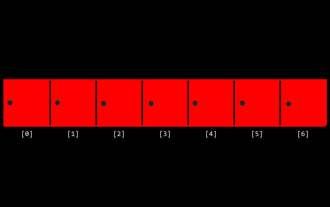
Algorithms are the set of instructions to solve problems, and their execution speed and memory usage vary. In programming, many algorithms are based on data search and sorting. This article will introduce several data retrieval and sorting algorithms. Linear search assumes that there is an array [20,500,10,5,100,1,50] and needs to find the number 50. The linear search algorithm checks each element in the array one by one until the target value is found or the complete array is traversed. The algorithm flowchart is as follows: The pseudo-code for linear search is as follows: Check each element: If the target value is found: Return true Return false C language implementation: #include#includeintmain(void){i
 How to define the call declaration format of c language function
Apr 04, 2025 am 06:03 AM
How to define the call declaration format of c language function
Apr 04, 2025 am 06:03 AM
C language functions include definitions, calls and declarations. Function definition specifies function name, parameters and return type, function body implements functions; function calls execute functions and provide parameters; function declarations inform the compiler of function type. Value pass is used for parameter pass, pay attention to the return type, maintain a consistent code style, and handle errors in functions. Mastering this knowledge can help write elegant, robust C code.
