


How to write simple fireworks code in C language

To write a simple C language fireworks code, you need to follow the following steps: Include header files and libraries. Define constants and macros. Create a particle data structure. Declare global variables. Initialize the fireworks particles in the main() function. Update the particle's position and velocity in the game loop and draw them. Check for and destroy particles that have reached their end of life.

Simple Fireworks Code in C
To write a simple fireworks code in C, you can use the following steps :
1. Header files and libraries
#include <stdio.h>
#include <stdlib.h>
#include <math.h>
#include <time.h>
2. Constants and macro definitions
Define some for controlling the appearance of fireworks and behavior constants and macros:
#define NUM_PARTICLES    100
#define MAX_SPEED        10
#define MAX_LIFETIME     200
#define GRAVITY          0.1
3. Data structure
Create a structure to store the data of a single firework particle:
typedef struct {
    double x, y;          // 粒子的位置
    double vx, vy;        // 粒子的速度
    double lifetime;      // 粒子的剩余寿命
    int color;            // 粒子的颜色
} Particle;
4. Global variables
Declare an array to store fireworks particles:
Particle particles[NUM_PARTICLES];
5. Initialization
inmain() function, use the srand() function to seed the random number generator, and then randomly initialize the fireworks particles:
int main() {
    srand(time(NULL));

    for (int i = 0; i < NUM_PARTICLES; i++) {
        particles[i].x = rand() % 800;
        particles[i].y = 600;
        particles[i].vx = (rand() % 2000 - 1000) / 100.0;
        particles[i].vy = (rand() % 2000 - 1000) / 100.0;
        particles[i].lifetime = MAX_LIFETIME;
        particles[i].color = rand() % 6;
    }

    // ...
}
6. Update and draw
In the game loop, update the position and velocity of each firework particle and draw them:
void update() {
    for (int i = 0; i < NUM_PARTICLES; i++) {
        particles[i].x += particles[i].vx;
        particles[i].y += particles[i].vy;

        particles[i].vy += GRAVITY;

        particles[i].lifetime--;

        // 绘制粒子
        // ...
    }
}
#7. Check for destruction
In each update loop , check whether the life of each firework particle has expired, and if so, destroy it from the array:
void check_destroy() {
    for (int i = 0; i < NUM_PARTICLES; i++) {
        if (particles[i].lifetime <= 0) {
            particles[i] = particles[NUM_PARTICLES - 1];
            NUM_PARTICLES--;
        }
    }
}
The above is the detailed content of How to write simple fireworks code in C language. For more information, please follow other related articles on the PHP Chinese website!

Hot AI Tools

Undress AI Tool
Undress images for free

Undresser.AI Undress
AI-powered app for creating realistic nude photos

AI Clothes Remover
Online AI tool for removing clothes from photos.

Clothoff.io
AI clothes remover

Video Face Swap
Swap faces in any video effortlessly with our completely free AI face swap tool!

Hot Article
Hot Tools

Notepad++7.3.1
Easy-to-use and free code editor

SublimeText3 Chinese version
Chinese version, very easy to use

Zend Studio 13.0.1
Powerful PHP integrated development environment

Dreamweaver CS6
Visual web development tools

SublimeText3 Mac version
God-level code editing software (SublimeText3)


 C language data structure: data representation and operation of trees and graphs
Apr 04, 2025 am 11:18 AM
C language data structure: data representation and operation of trees and graphs
Apr 04, 2025 am 11:18 AM
C language data structure: The data representation of the tree and graph is a hierarchical data structure consisting of nodes. Each node contains a data element and a pointer to its child nodes. The binary tree is a special type of tree. Each node has at most two child nodes. The data represents structTreeNode{intdata;structTreeNode*left;structTreeNode*right;}; Operation creates a tree traversal tree (predecision, in-order, and later order) search tree insertion node deletes node graph is a collection of data structures, where elements are vertices, and they can be connected together through edges with right or unrighted data representing neighbors.
 How debian readdir integrates with other tools
Apr 13, 2025 am 09:42 AM
How debian readdir integrates with other tools
Apr 13, 2025 am 09:42 AM
The readdir function in the Debian system is a system call used to read directory contents and is often used in C programming. This article will explain how to integrate readdir with other tools to enhance its functionality. Method 1: Combining C language program and pipeline First, write a C program to call the readdir function and output the result: #include#include#include#includeintmain(intargc,char*argv[]){DIR*dir;structdirent*entry;if(argc!=2){
 The truth behind the C language file operation problem
Apr 04, 2025 am 11:24 AM
The truth behind the C language file operation problem
Apr 04, 2025 am 11:24 AM
The truth about file operation problems: file opening failed: insufficient permissions, wrong paths, and file occupied. Data writing failed: the buffer is full, the file is not writable, and the disk space is insufficient. Other FAQs: slow file traversal, incorrect text file encoding, and binary file reading errors.
 How to understand ABI compatibility in C?
Apr 28, 2025 pm 10:12 PM
How to understand ABI compatibility in C?
Apr 28, 2025 pm 10:12 PM
ABI compatibility in C refers to whether binary code generated by different compilers or versions can be compatible without recompilation. 1. Function calling conventions, 2. Name modification, 3. Virtual function table layout, 4. Structure and class layout are the main aspects involved.
 C language multithreaded programming: a beginner's guide and troubleshooting
Apr 04, 2025 am 10:15 AM
C language multithreaded programming: a beginner's guide and troubleshooting
Apr 04, 2025 am 10:15 AM
C language multithreading programming guide: Creating threads: Use the pthread_create() function to specify thread ID, properties, and thread functions. Thread synchronization: Prevent data competition through mutexes, semaphores, and conditional variables. Practical case: Use multi-threading to calculate the Fibonacci number, assign tasks to multiple threads and synchronize the results. Troubleshooting: Solve problems such as program crashes, thread stop responses, and performance bottlenecks.
 How to output a countdown in C language
Apr 04, 2025 am 08:54 AM
How to output a countdown in C language
Apr 04, 2025 am 08:54 AM
How to output a countdown in C? Answer: Use loop statements. Steps: 1. Define the variable n and store the countdown number to output; 2. Use the while loop to continuously print n until n is less than 1; 3. In the loop body, print out the value of n; 4. At the end of the loop, subtract n by 1 to output the next smaller reciprocal.
 CS-Week 3
Apr 04, 2025 am 06:06 AM
CS-Week 3
Apr 04, 2025 am 06:06 AM
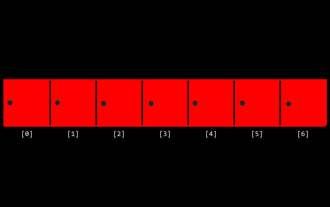
Algorithms are the set of instructions to solve problems, and their execution speed and memory usage vary. In programming, many algorithms are based on data search and sorting. This article will introduce several data retrieval and sorting algorithms. Linear search assumes that there is an array [20,500,10,5,100,1,50] and needs to find the number 50. The linear search algorithm checks each element in the array one by one until the target value is found or the complete array is traversed. The algorithm flowchart is as follows: The pseudo-code for linear search is as follows: Check each element: If the target value is found: Return true Return false C language implementation: #include#includeintmain(void){i
 C language file operation: How to read files?
Apr 04, 2025 am 10:42 AM
C language file operation: How to read files?
Apr 04, 2025 am 10:42 AM
C language file operation: Read file introduction File processing is a crucial part of C language programming, which allows programs to interact with external storage devices such as disks and flash drives. This article will explore how to read files in C language. Steps to read a file to open the file: use the fopen function to open the file. This function requires two parameters: file name and open mode. Check whether the file is open: Check whether the pointer returned by the fopen function is NULL. If NULL, the file cannot be opened. Read file: Use the fread function to read data from the file to the buffer. This function requires four parameters: buffer address, buffer element size, number of elements to be read, and file pointer. Close the file: Use f
