


How to implement current limiting in redis

Redis implements current limiting and uses the token bucket algorithm and sliding window algorithm. The token bucket algorithm limits incoming requests, and the sliding window algorithm records the number of requests within a certain period of time and determines whether it exceeds the threshold. Redis uses the incr/decr command to operate the token bucket, and uses the time and incrby commands to record the number of sliding window requests. Current limiting configuration is implemented through the set and config set commands. The sample code sets the token bucket capacity and rate, sliding window size and threshold, and checks whether the request is current limited.

Redis current limiting implementation
Redis uses the token bucket algorithm and Sliding window algorithm to achieve current limiting.
Token Bucket Algorithm
The Token Bucket Algorithm treats the requests flowing into the system as water flow, and the Token Bucket is a bucket that can hold a fixed number of tokens. container. The system adds tokens to the token bucket at a constant rate. When a request arrives, the system takes a token from the token bucket. If there are not enough tokens, the request is rejected.
Sliding window algorithm
The sliding window algorithm divides time into fixed-size intervals (windows) and records the number of requests within each window. When a new request arrives, the system checks whether the number of requests within the current window exceeds the threshold. If so, the request will be rejected.
Implementation in Redis
Redis uses a combination of token bucket algorithm and sliding window algorithm to achieve current limiting.
Token Bucket
The token bucket in Redis is operated using the incr/decr command. The incr command adds tokens to the token bucket, and the decr command removes tokens from the token bucket.
Sliding Window
Redis uses the time command to get the current time, and the incrby command to record each window number of requests within.
Current limiting configuration
Redis uses the set and config set commands to configure the current limiting parameters.
-
setcommand is used to set the capacity and generation rate of the token bucket. -
config setcommand is used to set the size and threshold of the sliding window.
Usage Example
<code># 设置令牌桶,容量为100,生成速率为每秒10个令牌
SET my_token_bucket 100
CONFIG SET my_token_bucket_refill_rate 10

# 设置滑动窗口,大小为10秒,阈值为每秒100个请求
CONFIG SET my_sliding_window_size 10
CONFIG SET my_sliding_window_threshold 100

# 检查请求是否被限流
IF INCR my_sliding_window_counter > my_sliding_window_threshold THEN
  # 请求被限流,拒绝
  DECR my_sliding_window_counter
  RETURN -1
END IF

# 请求未被限流,记录请求并执行操作
INCR my_sliding_window_counter
# ... 执行操作 ...</code>
The above is the detailed content of How to implement current limiting in redis. For more information, please follow other related articles on the PHP Chinese website!

Hot AI Tools

Undress AI Tool
Undress images for free

Undresser.AI Undress
AI-powered app for creating realistic nude photos

AI Clothes Remover
Online AI tool for removing clothes from photos.

Clothoff.io
AI clothes remover

Video Face Swap
Swap faces in any video effortlessly with our completely free AI face swap tool!

Hot Article
Hot Tools

Notepad++7.3.1
Easy-to-use and free code editor

SublimeText3 Chinese version
Chinese version, very easy to use

Zend Studio 13.0.1
Powerful PHP integrated development environment

Dreamweaver CS6
Visual web development tools

SublimeText3 Mac version
God-level code editing software (SublimeText3)


 Redis master-slave replication failure troubleshooting process
Jun 04, 2025 pm 08:51 PM
Redis master-slave replication failure troubleshooting process
Jun 04, 2025 pm 08:51 PM
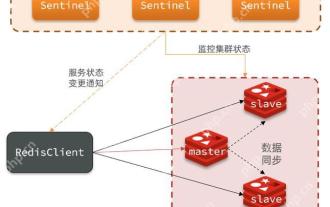
The steps for troubleshooting and repairing Redis master-slave replication failures include: 1. Check the network connection and use ping or telnet to test connectivity; 2. Check the Redis configuration file to ensure that the replicaof and repl-timeout are set correctly; 3. Check the Redis log file and find error information; 4. If it is a network problem, try to restart the network device or switch the alternate path; 5. If it is a configuration problem, modify the configuration file; 6. If it is a data synchronization problem, use the SLAVEOF command to resync the data.
 Quick location and handling of Redis cluster node failures
Jun 04, 2025 pm 08:54 PM
Quick location and handling of Redis cluster node failures
Jun 04, 2025 pm 08:54 PM
The quick location and processing steps for Redis cluster node failure are as follows: 1. Confirm the fault: Use the CLUSTERNODES command to view the node status. If the fail is displayed, the node will fail. 2. Determine the cause: Check the network, hardware, and configuration. Common problems include memory limits exceeding. 3. Repair and restore: Take measures based on the reasons, such as restarting the service, replacing the hardware or modifying the configuration. 4. Notes: Ensure data consistency, select appropriate failover policies, and establish monitoring and alarm systems.
 Methods and strategies to solve the problem of split brain in Redis cluster
Jun 04, 2025 pm 08:42 PM
Methods and strategies to solve the problem of split brain in Redis cluster
Jun 04, 2025 pm 08:42 PM
Effective solutions to the problem of split brain in Redis cluster include: 1) Network configuration optimization to ensure connection stability; 2) Node monitoring and fault detection, real-time monitoring with tools; 3) Failover mechanism, setting high thresholds to avoid multiple master nodes; 4) Data consistency guarantee, using replication function to synchronize data; 5) Manual intervention and recovery, and manual processing if necessary.
 Performance comparison and joint application scenarios between Redis and RabbitMQ
Jun 04, 2025 pm 08:45 PM
Performance comparison and joint application scenarios between Redis and RabbitMQ
Jun 04, 2025 pm 08:45 PM
Redis and RabbitMQ each have their own advantages in performance and joint application scenarios. 1.Redis performs excellently in data reading and writing, with a latency of up to microseconds, suitable for high concurrency scenarios. 2.RabbitMQ focuses on messaging, latency at milliseconds, and supports multi-queue and consumer models. 3. In joint applications, Redis can be used for data storage, RabbitMQ handles asynchronous tasks, and improves system response speed and reliability.
 Configuration suggestions for improving Redis persistence performance
Jun 04, 2025 pm 08:48 PM
Configuration suggestions for improving Redis persistence performance
Jun 04, 2025 pm 08:48 PM
Methods to improve Redis persistence performance through configuration include: 1. Adjust the save parameters of RDB to reduce the snapshot generation frequency; 2. Set the appendfsync parameter of AOF to everysec; 3. Use AOF and RDB in combination; 4. Use no-appendfsync-on-rewrite parameters to optimize AOF rewrite performance; 5. Enable hybrid persistence mode. These configurations can improve performance while ensuring data security.
 Methods to implement data deduplication using Redis sets (Sets)
Jun 04, 2025 pm 08:33 PM
Methods to implement data deduplication using Redis sets (Sets)
Jun 04, 2025 pm 08:33 PM
The Redis collection is selected to implement data deduplication because it supports quick insertion and search, and it automatically deduplication. 1) The Redis collection is based on an ordered collection structure without repeat elements, and is suitable for scenarios where quick insertion and query are required. 2) But you need to pay attention to its memory usage, because each element occupies memory. 3) It can be optimized for use through shard storage, regular cleaning and combined with other storage.
 How to use PHP combined with AI to achieve text error correction PHP syntax detection and optimization
Jul 25, 2025 pm 08:57 PM
How to use PHP combined with AI to achieve text error correction PHP syntax detection and optimization
Jul 25, 2025 pm 08:57 PM
To realize text error correction and syntax optimization with AI, you need to follow the following steps: 1. Select a suitable AI model or API, such as Baidu, Tencent API or open source NLP library; 2. Call the API through PHP's curl or Guzzle and process the return results; 3. Display error correction information in the application and allow users to choose whether to adopt it; 4. Use php-l and PHP_CodeSniffer for syntax detection and code optimization; 5. Continuously collect feedback and update the model or rules to improve the effect. When choosing AIAPI, focus on evaluating accuracy, response speed, price and support for PHP. Code optimization should follow PSR specifications, use cache reasonably, avoid circular queries, review code regularly, and use X
 Tools and metrics to monitor the health status of Redis clusters
Jun 04, 2025 pm 08:39 PM
Tools and metrics to monitor the health status of Redis clusters
Jun 04, 2025 pm 08:39 PM
Through tools such as redis-cli, RedisInsight, Prometheus and Grafana, as well as focusing on memory usage, number of connections, cluster node status, data consistency and performance indicators, the health status of the Redis cluster can be effectively monitored.
