


 Backend Development
PHP Tutorial
PHP anti-shake technology: avoid data confusion caused by repeated submissions
Backend Development
PHP Tutorial
PHP anti-shake technology: avoid data confusion caused by repeated submissions
PHP anti-shake technology: avoid data confusion caused by repeated submissions

PHP anti-shake technology: To avoid data confusion caused by repeated submissions, specific code examples are needed
Introduction:
When developing web applications, we often You will encounter the problem of repeated submissions by users. Repeated submissions by users will lead to data confusion and inconsistency, bringing unnecessary burden and security risks to the system. In order to solve this problem, we can use PHP's anti-shake technology to avoid data confusion caused by repeated submissions by users. This article will introduce what anti-shake technology is and give specific code examples.
What is anti-shake technology?
Anti-shake technology is a commonly used technology in front-end and back-end development to avoid repeated triggering. The basic principle is to avoid performing the same operation multiple times by ignoring repeated trigger events for a period of time. In PHP, we can determine whether the duplicate submission has been processed by setting a specific flag.
Specific code example:
The following is a simple PHP code example that demonstrates how to use anti-shake technology to handle the user's repeated submission problem.
<?php
// 判断是否已经处理过重复提交
if(isset($_SESSION['isProcessed'])){
    echo '请勿重复提交';
    exit;
}

// 标记为已处理
$_SESSION['isProcessed'] = true;

// 处理具体的业务逻辑
// ...

// 清除标记
unset($_SESSION['isProcessed']);
?>In the above code example, we first determine whether duplicate submissions have been processed, and use isset($_SESSION['isProcessed']) to determine whether it has been setisProcessed flag. If it has been set, it means that the duplicate submission has been processed, and the prompt message will be output directly and exit. If it is not set, it means the first submission. We will set the isProcessed flag to true and perform specific business logic processing. After the processing is completed, we clear the flag bit through unset($_SESSION['isProcessed']) so that it can be resubmitted next time.
It should be noted that the above code uses PHP's $_SESSION to save the flag bit, ensuring that it can be normally judged whether repeated submissions have been processed in the same session. At the same time, the flag bit can be saved in the database or other persistent storage as needed.
Conclusion:
By using PHP's anti-shake technology, we can effectively avoid the data confusion caused by repeated submissions. The use of anti-shake technology can ensure that each request will only execute relevant business logic once, avoiding system burden and data errors. In actual development, we can adjust the anti-shake time interval and the way to save flags according to specific needs. I hope the code examples in this article can help you better understand and apply PHP's anti-shake technology.
The above is the detailed content of PHP anti-shake technology: avoid data confusion caused by repeated submissions. For more information, please follow other related articles on the PHP Chinese website!

Hot AI Tools

Undresser.AI Undress
AI-powered app for creating realistic nude photos

AI Clothes Remover
Online AI tool for removing clothes from photos.

Undress AI Tool
Undress images for free

Clothoff.io
AI clothes remover

AI Hentai Generator
Generate AI Hentai for free.

Hot Article
Hot Tools

Notepad++7.3.1
Easy-to-use and free code editor

SublimeText3 Chinese version
Chinese version, very easy to use

Zend Studio 13.0.1
Powerful PHP integrated development environment

Dreamweaver CS6
Visual web development tools

SublimeText3 Mac version
God-level code editing software (SublimeText3)
Hot Topics
 1377
1377
 52
52

 PHP 8.4 Installation and Upgrade guide for Ubuntu and Debian
Dec 24, 2024 pm 04:42 PM
PHP 8.4 Installation and Upgrade guide for Ubuntu and Debian
Dec 24, 2024 pm 04:42 PM
PHP 8.4 brings several new features, security improvements, and performance improvements with healthy amounts of feature deprecations and removals. This guide explains how to install PHP 8.4 or upgrade to PHP 8.4 on Ubuntu, Debian, or their derivati
 Discuss CakePHP
Sep 10, 2024 pm 05:28 PM
Discuss CakePHP
Sep 10, 2024 pm 05:28 PM
CakePHP is an open-source framework for PHP. It is intended to make developing, deploying and maintaining applications much easier. CakePHP is based on a MVC-like architecture that is both powerful and easy to grasp. Models, Views, and Controllers gu
 CakePHP File upload
Sep 10, 2024 pm 05:27 PM
CakePHP File upload
Sep 10, 2024 pm 05:27 PM
To work on file upload we are going to use the form helper. Here, is an example for file upload.
 How To Set Up Visual Studio Code (VS Code) for PHP Development
Dec 20, 2024 am 11:31 AM
How To Set Up Visual Studio Code (VS Code) for PHP Development
Dec 20, 2024 am 11:31 AM
Visual Studio Code, also known as VS Code, is a free source code editor — or integrated development environment (IDE) — available for all major operating systems. With a large collection of extensions for many programming languages, VS Code can be c
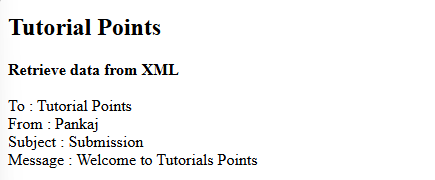 How do you parse and process HTML/XML in PHP?
Feb 07, 2025 am 11:57 AM
How do you parse and process HTML/XML in PHP?
Feb 07, 2025 am 11:57 AM
This tutorial demonstrates how to efficiently process XML documents using PHP. XML (eXtensible Markup Language) is a versatile text-based markup language designed for both human readability and machine parsing. It's commonly used for data storage an
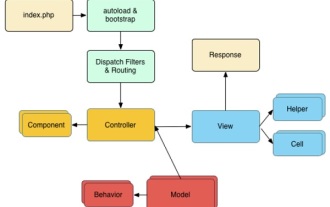 CakePHP Quick Guide
Sep 10, 2024 pm 05:27 PM
CakePHP Quick Guide
Sep 10, 2024 pm 05:27 PM
CakePHP is an open source MVC framework. It makes developing, deploying and maintaining applications much easier. CakePHP has a number of libraries to reduce the overload of most common tasks.
 PHP Program to Count Vowels in a String
Feb 07, 2025 pm 12:12 PM
PHP Program to Count Vowels in a String
Feb 07, 2025 pm 12:12 PM
A string is a sequence of characters, including letters, numbers, and symbols. This tutorial will learn how to calculate the number of vowels in a given string in PHP using different methods. The vowels in English are a, e, i, o, u, and they can be uppercase or lowercase. What is a vowel? Vowels are alphabetic characters that represent a specific pronunciation. There are five vowels in English, including uppercase and lowercase: a, e, i, o, u Example 1 Input: String = "Tutorialspoint" Output: 6 explain The vowels in the string "Tutorialspoint" are u, o, i, a, o, i. There are 6 yuan in total
 Explain JSON Web Tokens (JWT) and their use case in PHP APIs.
Apr 05, 2025 am 12:04 AM
Explain JSON Web Tokens (JWT) and their use case in PHP APIs.
Apr 05, 2025 am 12:04 AM
JWT is an open standard based on JSON, used to securely transmit information between parties, mainly for identity authentication and information exchange. 1. JWT consists of three parts: Header, Payload and Signature. 2. The working principle of JWT includes three steps: generating JWT, verifying JWT and parsing Payload. 3. When using JWT for authentication in PHP, JWT can be generated and verified, and user role and permission information can be included in advanced usage. 4. Common errors include signature verification failure, token expiration, and payload oversized. Debugging skills include using debugging tools and logging. 5. Performance optimization and best practices include using appropriate signature algorithms, setting validity periods reasonably,
