


How to create a theme navigation menu in WordPress (2)

I introduced you to "How to create a theme navigation menu in WordPress (1)". This article will continue to introduce you to how to create a theme navigation menu in WordPress. I hope it will be helpful to you!

The previous tutorial talked about how to use WordPress’s built-in functions to create navigation menus, but the HTML codes generated by these functions are fixed, making it difficult for you to define navigation. The HTML code for the menu. This article will introduce you to a few freer ways to create navigation menus that can be used for more than just navigation menus. Of course, this article only provides you with an idea to solve the problem. It is not a tutorial like a recipe. Once you read it and copy it, you can use it in your project.
1. Use get_terms() to get the category list
Use get_terms() to get your article categories, link categories and customizations Categories, etc., passing the corresponding parameters to get_terms() can return you an object array. This array is all the categories you want. The following is the function prototype of get_terms():
<?php get_terms( $taxonomies, $args ) ?>
$taxonomies:
This parameter is the classification category you want to obtain. Optional values include: "category", "link_category", "my_taxonomy", which respectively represent article classification, link classification and Your customized classification, where my_taxonomy is your customized classification name.
$args:
This parameter is the filtering parameter of the category, used to control the acquisition of the category you want to obtain, including how many categories you want to obtain, how to sort, and the parent category And whether to output empty categories, etc. For details, please refer to WordPress official documentation: Function Reference/get terms, or refer to the brief translation in Chinese: Common functions-get_terms()
The following is an example of using this function. Here, an unordered list in the form of
- .. ..
<ul id="menu">
<?php
// 获取分类
$terms = get_terms('category', 'orderby=name&hide_empty=0' );
// 获取到的分类数量
$count = count($terms);
if($count > 0){
// 循环输出所有分类信息
foreach ($terms as $term) {
echo '<li><a href="'.get_term_link($term, $term->slug).'" title="'.$term->name.'">'.$term->name.'</a></li>';
}
}
?>
</ul>The get_terms() function returns an object array $terms. We first determine whether the array is empty. If it is empty, it means that no category has been obtained. If If it is not empty then you can output the classification. Each array item of $terms is an object. The meanings of some object attributes are: slug: category abbreviation, name: category name, term_id: category id. As shown in the above code, you can get the attribute value of the object through $term->name.
2. Use the method of reading the database to obtain the classification list
If you know the WordPress database, you can find that WordPress classification information is stored in wp_terms and wp_term_taxonomy. In the table, wp_terms stores basic information (including article classification, article tags, link classification, etc.), and wp_term_taxonomy is used to store further descriptions (used to store descriptions, distinguish categories and tags, etc.). We can use SQL to get the list of categories we want from these two tables:
<ul id="menu">
<?php
$cats = $wpdb->get_results("SELECT {$wpdb->prefix}terms.term_id, name
FROM {$wpdb->prefix}term_taxonomy, {$wpdb->prefix}terms
WHERE {$wpdb->prefix}term_taxonomy.term_id = {$wpdb->prefix}terms.term_id
AND taxonomy = 'category'");
if($cats) {
foreach($cats as $cat) {
echo '<li><a href="'.get_category_link($cat->term_id).'" title="'.$cat->name.'">'.$cat->name.'</a></li>';
}
}
?>
</ul>3. How to get the id of the current category
Sometimes we need to make a sub-navigation, such as the human resources navigation on the left of http://www.nashowgroup.com/?p=58&lang=zh. This navigation can be any item, such as the current category subcategories under or articles under the current category, etc. So the first question is, how to get the ID of the current category so that we can take the next step.
Get the id of the current category on the category page:
if ( is_category() ) {
	$cat_id = get_query_var('cat');
}Get the first category of the article on the article page:
$cats = get_the_category();
if($cats)
$cat_id = $cats[0]->cat_ID;四、子导航的制作
上面我们讲解了如何获取当前分类的id,下面我们来讲讲如何制作子导航。首先,我们来制作一个当前分类下子分类的子导航,这里用到wp_list_categories()来列出子分类,当然你可以用我前面介绍的两种方法来获取分类。:
<ul> <?php // 这里我们用到上面获取到的$cat_id,获取该分类下的所有子分类 wp_list_categories('orderby=name&hide_empty=0&child_of=' . $cat_id); ?> </ul>
如果你的网站规模比较小,一个分类下的文章也不多,那么你可以在子导航中列出这个分类下的所有文章:
<ul> <?php global $wp_query; $query = array ( 'cat' => $cat_id, 'orderby' => title, 'order'=> ASC ); $queryObject = new WP_Query($query); if ($queryObject->have_posts()) : while ($queryObject->have_posts()) : $queryObject->the_post(); ?> <li><a <?php if($post->ID == $wp_query->post->ID) echo 'class="chose"'; ?> href="<?php the_permalink() ?>"><?php the_title(); ?></a></li> <?php endwhile; wp_reset_postdata(); endif; ?> </ul>
以上代码中用到了WP_Query来获取文章列表,该对象的使用方法,可以参考WordPress的官方文档:Class Reference/WP Query和Function Reference/query posts。class="chose"用于高亮当前文章的菜单项,css规则你可以自己定义。
五、页面page的获取
WordPress的页面page可以通过wp_list_pages()来列出,不过这个函数输出的HTML都是固定的,如果你想要自定义这些HTML,可以使用get_pages()来获取页面列表,代码示例如下:
<ul id="menu">
$mypages = get_pages();
if(count($mypages) > 0) {
foreach($mypages as $page) {
echo '<li><a href="'.get_page_link($page->ID).'" title="'.$page->post_title.'">'.$page->post_title.'</a></li>';
}
}
else {
echo '<li><a href="#">没有页面</a></li>';
}
</ul>-- 完 --
推荐学习:《WordPress教程》
The above is the detailed content of How to create a theme navigation menu in WordPress (2). For more information, please follow other related articles on the PHP Chinese website!

Hot AI Tools

Undresser.AI Undress
AI-powered app for creating realistic nude photos

AI Clothes Remover
Online AI tool for removing clothes from photos.

Undress AI Tool
Undress images for free

Clothoff.io
AI clothes remover

AI Hentai Generator
Generate AI Hentai for free.

Hot Article
Hot Tools

Notepad++7.3.1
Easy-to-use and free code editor

SublimeText3 Chinese version
Chinese version, very easy to use

Zend Studio 13.0.1
Powerful PHP integrated development environment

Dreamweaver CS6
Visual web development tools

SublimeText3 Mac version
God-level code editing software (SublimeText3)
Hot Topics
 1378
1378
 52
52

 PHP 8.4 Installation and Upgrade guide for Ubuntu and Debian
Dec 24, 2024 pm 04:42 PM
PHP 8.4 Installation and Upgrade guide for Ubuntu and Debian
Dec 24, 2024 pm 04:42 PM
PHP 8.4 brings several new features, security improvements, and performance improvements with healthy amounts of feature deprecations and removals. This guide explains how to install PHP 8.4 or upgrade to PHP 8.4 on Ubuntu, Debian, or their derivati
 How To Set Up Visual Studio Code (VS Code) for PHP Development
Dec 20, 2024 am 11:31 AM
How To Set Up Visual Studio Code (VS Code) for PHP Development
Dec 20, 2024 am 11:31 AM
Visual Studio Code, also known as VS Code, is a free source code editor — or integrated development environment (IDE) — available for all major operating systems. With a large collection of extensions for many programming languages, VS Code can be c
 7 PHP Functions I Regret I Didn't Know Before
Nov 13, 2024 am 09:42 AM
7 PHP Functions I Regret I Didn't Know Before
Nov 13, 2024 am 09:42 AM
If you are an experienced PHP developer, you might have the feeling that you’ve been there and done that already.You have developed a significant number of applications, debugged millions of lines of code, and tweaked a bunch of scripts to achieve op
 How do you parse and process HTML/XML in PHP?
Feb 07, 2025 am 11:57 AM
How do you parse and process HTML/XML in PHP?
Feb 07, 2025 am 11:57 AM
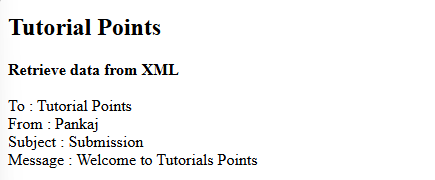
This tutorial demonstrates how to efficiently process XML documents using PHP. XML (eXtensible Markup Language) is a versatile text-based markup language designed for both human readability and machine parsing. It's commonly used for data storage an
 Explain JSON Web Tokens (JWT) and their use case in PHP APIs.
Apr 05, 2025 am 12:04 AM
Explain JSON Web Tokens (JWT) and their use case in PHP APIs.
Apr 05, 2025 am 12:04 AM
JWT is an open standard based on JSON, used to securely transmit information between parties, mainly for identity authentication and information exchange. 1. JWT consists of three parts: Header, Payload and Signature. 2. The working principle of JWT includes three steps: generating JWT, verifying JWT and parsing Payload. 3. When using JWT for authentication in PHP, JWT can be generated and verified, and user role and permission information can be included in advanced usage. 4. Common errors include signature verification failure, token expiration, and payload oversized. Debugging skills include using debugging tools and logging. 5. Performance optimization and best practices include using appropriate signature algorithms, setting validity periods reasonably,
 PHP Program to Count Vowels in a String
Feb 07, 2025 pm 12:12 PM
PHP Program to Count Vowels in a String
Feb 07, 2025 pm 12:12 PM
A string is a sequence of characters, including letters, numbers, and symbols. This tutorial will learn how to calculate the number of vowels in a given string in PHP using different methods. The vowels in English are a, e, i, o, u, and they can be uppercase or lowercase. What is a vowel? Vowels are alphabetic characters that represent a specific pronunciation. There are five vowels in English, including uppercase and lowercase: a, e, i, o, u Example 1 Input: String = "Tutorialspoint" Output: 6 explain The vowels in the string "Tutorialspoint" are u, o, i, a, o, i. There are 6 yuan in total
 Explain late static binding in PHP (static::).
Apr 03, 2025 am 12:04 AM
Explain late static binding in PHP (static::).
Apr 03, 2025 am 12:04 AM
Static binding (static::) implements late static binding (LSB) in PHP, allowing calling classes to be referenced in static contexts rather than defining classes. 1) The parsing process is performed at runtime, 2) Look up the call class in the inheritance relationship, 3) It may bring performance overhead.
 What are PHP magic methods (__construct, __destruct, __call, __get, __set, etc.) and provide use cases?
Apr 03, 2025 am 12:03 AM
What are PHP magic methods (__construct, __destruct, __call, __get, __set, etc.) and provide use cases?
Apr 03, 2025 am 12:03 AM
What are the magic methods of PHP? PHP's magic methods include: 1.\_\_construct, used to initialize objects; 2.\_\_destruct, used to clean up resources; 3.\_\_call, handle non-existent method calls; 4.\_\_get, implement dynamic attribute access; 5.\_\_set, implement dynamic attribute settings. These methods are automatically called in certain situations, improving code flexibility and efficiency.
