


Summary of three commonly used design patterns in PHP

This article briefly introduces the three most commonly used design patterns in PHP: singleton design pattern, factory design pattern and observer design pattern. These are some personal experience summaries. I hope friends can like
Singleton Design Pattern
The so-called singleton pattern is the most commonly used in applications. Only one instance of this class exists, and once created, it remains in memory!
The singleton design pattern is often used in database class design. The singleton pattern is used to connect to the database only once to prevent multiple database connections from being opened.
A singleton class should have the following characteristics:
A singleton class cannot be directly instantiated and created, but can only be instantiated by the class itself. Therefore, to obtain such a restrictive effect, the constructor must be marked private, thus preventing the class from being instantiated.
Requires a private static member variable to save the class instance and expose a public static method that can access the instance.
In PHP, in order to prevent others from cloning singleton class instances, an empty private __clone() method is usually provided for it.
Examples of singleton pattern:
 <?php

/**
* Singleton of Database
*/
class Database
{
  // We need a static private variable to store a Database instance.
  privatestatic $instance;

  // Mark as private to prevent it from being instanced.
  privatefunction__construct()
  {
    // Do nothing.
  }

  privatefunction__clone()
  {
    // Do nothing.
  }

  publicstatic functiongetInstance()
  {
    if (!(self::$instanceinstanceofself)) {
      self::$instance = newself();
    }

    returnself::$instance;
  }
}

$a =Database::getInstance();
$b =Database::getInstance();

// true
var_dump($a === $b);Factory design pattern
Factory design pattern is commonly used It is used to create an instance specifically used to instantiate and return its corresponding class based on different input parameters or application configuration.
Let’s take an example. Assume that rectangle and circle have the same method. Then when we use the API provided by the base class to create an instance, we will automatically create an instance of the corresponding class by passing parameters. They all have access to Functions of perimeter and area.
 <?php

interfaceInterfaceShape
{
 functiongetArea();
 functiongetCircumference();
}

/**
* 矩形
*/
class Rectangle implementsInterfaceShape
{
  private $width;
  private $height;

  publicfunction__construct($width, $height)
  {
    $this->width = $width;
    $this->height = $height;
  }

  publicfunctiongetArea()
  {
    return $this->width* $this->height;
  }

  publicfunctiongetCircumference()
  {
    return 2 * $this->width + 2 * $this->height;
  }
}

/**
* 圆形
*/
class Circle implementsInterfaceShape
{
  private $radius;

  function__construct($radius)
  {
    $this->radius = $radius;
  }


  publicfunctiongetArea()
  {
    return M_PI * pow($this->radius, 2);
  }

  publicfunctiongetCircumference()
  {
    return 2 * M_PI * $this->radius;
  }
}

/**
* 形状工厂类
*/
class FactoryShape
{
  publicstatic functioncreate()
  {
    switch (func_num_args()) {
      case1:
      return newCircle(func_get_arg(0));
      case2:
      return newRectangle(func_get_arg(0), func_get_arg(1));
      default:
        # code...
        break;
    }
  }
}

$rect =FactoryShape::create(5, 5);
// object(Rectangle)#1 (2) { ["width":"Rectangle":private]=> int(5) ["height":"Rectangle":private]=> int(5) }
var_dump($rect);
echo "<br>";

// object(Circle)#2 (1) { ["radius":"Circle":private]=> int(4) }
$circle =FactoryShape::create(4);
var_dump($circle);Observer design pattern
The observer pattern is a very common design pattern, and it can be used properly It brings great convenience to the program. If used improperly, it will give future generations an idea that is difficult to maintain.
What is the observer pattern? An object makes itself observable by providing methods that allow another object, an observer, to register itself). When an observable object changes, it sends messages to registered observers. These observers use this information to perform operations independent of the observable object. The result is that objects can talk to each other without having to understand why. The observer pattern is an event system, which means that this pattern allows a class to observe the state of another class. When the state of the observed class changes, the observing class can receive notifications and take corresponding actions; observation The operator pattern provides you with the ability to avoid tight coupling between components. You will understand after looking at the example below!
<?php
/*
观察者接口
*/
interfaceInterfaceObserver
{
functiononListen($sender, $args);
functiongetObserverName();
}
// 可被观察者接口
interfaceInterfaceObservable
{
functionaddObserver($observer);
functionremoveObserver($observer_name);
}
// 观察者抽象类
abstractclass Observer implementsInterfaceObserver
{
protected $observer_name;
functiongetObserverName()
{
return $this->observer_name;
}
functiononListen($sender, $args)
{
}
}
// 可被观察类
abstractclass Observable implementsInterfaceObservable
{
protected $observers = array();
publicfunctionaddObserver($observer)
{
if ($observerinstanceofInterfaceObserver)
{
$this->observers[] = $observer;
}
}
publicfunctionremoveObserver($observer_name)
{
foreach ($this->observersas $index => $observer)
{
if ($observer->getObserverName() === $observer_name)
{
array_splice($this->observers, $index, 1);
return;
}
}
}
}
// 模拟一个可以被观察的类
class A extendsObservable
{
publicfunctionaddListener($listener)
{
foreach ($this->observersas $observer)
{
$observer->onListen($this, $listener);
}
}
}
// 模拟一个观察者类
class B extendsObserver
{
protected $observer_name = 'B';
publicfunctiononListen($sender, $args)
{
var_dump($sender);
echo "<br>";
var_dump($args);
echo "<br>";
}
}
// 模拟另外一个观察者类
class C extendsObserver
{
protected $observer_name = 'C';
publicfunctiononListen($sender, $args)
{
var_dump($sender);
echo "<br>";
var_dump($args);
echo "<br>";
}
}
$a = new A();
// 注入观察者
$a->addObserver(new B());
$a->addObserver(new C());
// 可以看到观察到的信息
$a->addListener('D');
// 移除观察者
$a->removeObserver('B');
// 打印的信息:
// object(A)#1 (1) { ["observers":protected]=> array(2) { [0]=> object(B)#2 (1) { ["observer_name":protected]=> string(1) "B" } [1]=> object(C)#3 (1) { ["observer_name":protected]=> string(1) "C" } } }
// string(1) "D"
// object(A)#1 (1) { ["observers":protected]=> array(2) { [0]=> object(B)#2 (1) { ["observer_name":protected]=> string(1) "B" } [1]=> object(C)#3 (1) { ["observer_name":protected]=> string(1) "C" } } }
// string(1) "D"Summary: The above is the entire content of this article, I hope it will be helpful to everyone's study.
Related recommendations:
php in_array() Detailed explanation of checking whether a certain value exists in the array
Solution to the problem of unable to log in to the PHP magento background
phpMethod to monitor whether data is successfully inserted into the Mysql database
The above is the detailed content of Summary of three commonly used design patterns in PHP. For more information, please follow other related articles on the PHP Chinese website!

Hot AI Tools

Undresser.AI Undress
AI-powered app for creating realistic nude photos

AI Clothes Remover
Online AI tool for removing clothes from photos.

Undress AI Tool
Undress images for free

Clothoff.io
AI clothes remover

AI Hentai Generator
Generate AI Hentai for free.

Hot Article
Hot Tools

Notepad++7.3.1
Easy-to-use and free code editor

SublimeText3 Chinese version
Chinese version, very easy to use

Zend Studio 13.0.1
Powerful PHP integrated development environment

Dreamweaver CS6
Visual web development tools

SublimeText3 Mac version
God-level code editing software (SublimeText3)
Hot Topics
 1378
1378
 52
52

 PHP 8.4 Installation and Upgrade guide for Ubuntu and Debian
Dec 24, 2024 pm 04:42 PM
PHP 8.4 Installation and Upgrade guide for Ubuntu and Debian
Dec 24, 2024 pm 04:42 PM
PHP 8.4 brings several new features, security improvements, and performance improvements with healthy amounts of feature deprecations and removals. This guide explains how to install PHP 8.4 or upgrade to PHP 8.4 on Ubuntu, Debian, or their derivati
 How To Set Up Visual Studio Code (VS Code) for PHP Development
Dec 20, 2024 am 11:31 AM
How To Set Up Visual Studio Code (VS Code) for PHP Development
Dec 20, 2024 am 11:31 AM
Visual Studio Code, also known as VS Code, is a free source code editor — or integrated development environment (IDE) — available for all major operating systems. With a large collection of extensions for many programming languages, VS Code can be c
 How do you parse and process HTML/XML in PHP?
Feb 07, 2025 am 11:57 AM
How do you parse and process HTML/XML in PHP?
Feb 07, 2025 am 11:57 AM
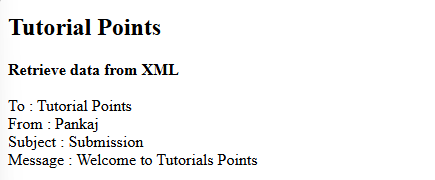
This tutorial demonstrates how to efficiently process XML documents using PHP. XML (eXtensible Markup Language) is a versatile text-based markup language designed for both human readability and machine parsing. It's commonly used for data storage an
 PHP Program to Count Vowels in a String
Feb 07, 2025 pm 12:12 PM
PHP Program to Count Vowels in a String
Feb 07, 2025 pm 12:12 PM
A string is a sequence of characters, including letters, numbers, and symbols. This tutorial will learn how to calculate the number of vowels in a given string in PHP using different methods. The vowels in English are a, e, i, o, u, and they can be uppercase or lowercase. What is a vowel? Vowels are alphabetic characters that represent a specific pronunciation. There are five vowels in English, including uppercase and lowercase: a, e, i, o, u Example 1 Input: String = "Tutorialspoint" Output: 6 explain The vowels in the string "Tutorialspoint" are u, o, i, a, o, i. There are 6 yuan in total
 Explain JSON Web Tokens (JWT) and their use case in PHP APIs.
Apr 05, 2025 am 12:04 AM
Explain JSON Web Tokens (JWT) and their use case in PHP APIs.
Apr 05, 2025 am 12:04 AM
JWT is an open standard based on JSON, used to securely transmit information between parties, mainly for identity authentication and information exchange. 1. JWT consists of three parts: Header, Payload and Signature. 2. The working principle of JWT includes three steps: generating JWT, verifying JWT and parsing Payload. 3. When using JWT for authentication in PHP, JWT can be generated and verified, and user role and permission information can be included in advanced usage. 4. Common errors include signature verification failure, token expiration, and payload oversized. Debugging skills include using debugging tools and logging. 5. Performance optimization and best practices include using appropriate signature algorithms, setting validity periods reasonably,
 7 PHP Functions I Regret I Didn't Know Before
Nov 13, 2024 am 09:42 AM
7 PHP Functions I Regret I Didn't Know Before
Nov 13, 2024 am 09:42 AM
If you are an experienced PHP developer, you might have the feeling that you’ve been there and done that already.You have developed a significant number of applications, debugged millions of lines of code, and tweaked a bunch of scripts to achieve op
 Explain late static binding in PHP (static::).
Apr 03, 2025 am 12:04 AM
Explain late static binding in PHP (static::).
Apr 03, 2025 am 12:04 AM
Static binding (static::) implements late static binding (LSB) in PHP, allowing calling classes to be referenced in static contexts rather than defining classes. 1) The parsing process is performed at runtime, 2) Look up the call class in the inheritance relationship, 3) It may bring performance overhead.
 What are PHP magic methods (__construct, __destruct, __call, __get, __set, etc.) and provide use cases?
Apr 03, 2025 am 12:03 AM
What are PHP magic methods (__construct, __destruct, __call, __get, __set, etc.) and provide use cases?
Apr 03, 2025 am 12:03 AM
What are the magic methods of PHP? PHP's magic methods include: 1.\_\_construct, used to initialize objects; 2.\_\_destruct, used to clean up resources; 3.\_\_call, handle non-existent method calls; 4.\_\_get, implement dynamic attribute access; 5.\_\_set, implement dynamic attribute settings. These methods are automatically called in certain situations, improving code flexibility and efficiency.
