


 Backend Development
PHP Tutorial
Four common ways for PHP to read text files and the meaning of uncommon parameters in str_replace
Backend Development
PHP Tutorial
Four common ways for PHP to read text files and the meaning of uncommon parameters in str_replace
Four common ways for PHP to read text files and the meaning of uncommon parameters in str_replace

This article mainly introduces in detail the four commonly used ways of reading text files in PHP and the meaning of uncommon parameters in str_replace. It has certain reference value and interested friends can refer to it
It may seem like a simple thing, but it’s probably because you don’t know enough about it. Of course, if you know more about it, you won’t find it complicated, but you know more than others. Just like our commonly used file_get_contents, we often use it to get the content of a URL, but in fact it can also be used to perform post requests, bring header information, set timeouts, and even call ftp, specify proxy, etc. Even like a simple echo function, if you don't know more, maybe you don't know that you can write multiple variables directly after echo, just use commas to separate them.
I accidentally came across a file method in the manual today. To be honest, I have never used this method before. I thought it was very useful. You can directly read the contents of a text file into an array line by line, which feels very convenient in some situations. Then I read more about how to operate files in PHP, and then used str_replace, a frequently used method. When using str_replace, I was wondering if I could control loop replacement through parameters.
For example, a string: hello world, I want to replace lo with ol. After replacement, it becomes hello world, and after one replacement, it has lo in its structure. Can I control it? Let it be replaced again. However, I found that there is no such parameter. str_replace itself has a fourth parameter, but it is a return data, returning the total number of replacements during the replacement period. Today’s play is organized as follows:
str_replace is organized as follows:
1:str_replace: The last parameter will return a statistical data of how many times it has been replaced in total.
2:str_replace : Will cycle and replace
3: str_replace: You can directly operate and replace the array, no need to cycle and replace individually
4: A very beautiful replacement: use an array to contain what you want to replace and what you want to replace
//1:str_replace:最后一个参数会返回总共替换了多少次的一个统计数据.
$char = str_replace(array('is','s'),'_','this is a replace test.', $count);
echo $char.'共替换'.$count.'次<br>';
//2:str_replace:会循环替换
$char = str_replace(array('t','k'),array('k','_'),'this is a replace test.', $count);
echo $char.'共替换'.$count.'次<br>';
//3:str_replace:可以直接对数组进行操作替换,不需要循环单独替换
$char_arr = array('hello','world');
$char_arr = str_replace(array('o','k'),array('k','_'),$char_arr,$count);
print_r($char_arr);
echo '共替换'.$count.'次<br><br>';
//4:一个非常漂亮的替换:使用一个数组
$replaceThis = Array(
'old word' => 'new word',
'was' => 'it',
'past' => 'future',
);
$originalText = "every old word was a thing of the past...";
$replacedText = str_replace(array_keys($replaceThi
About 4 ways to read files in PHP:
1, use fopen, fread to read the file once, or specify the size multiple times Read.
2, use fopen to open, read line by line through fgets, fgets does not specify the length parameter, and the default is to read 1k.
3, use the file function to read the contents into the array at once (separated by row)
4, read the file content by file_get_contents
$file_path = "error.log";
if(!file_exists($file_path)) exit('file not exits.');
//1,使用fopen,fread一次读取文件,也可通过指定大小多次读取。
$fp = fopen($file_path, "r");
$str = trim(fread($fp, filesize($file_path)));
echo str_replace(array("rn"), "<br>", $str);
echo "<br>".str_repeat('-', 50)."<br>";
//2,使用fopen打开,通过fgets逐行读取,fgets不指定length参数,默认是读取1k。
$fp = fopen($file_path,"r");
$str ="";
while(!feof($fp)){
$str .= fgets($fp);
}
$str = str_replace("rn","<br>",$str);
echo $str;
//3,使用file函数一次性将内容读入数组(按行分开)
$file = file($file_path);
echo implode('<br>', $file);
echo "<br>".str_repeat('-', 50)."<br>";
//4,读取文件内容的方式file_get_contents
$str=trim(file_get_contents($file_path));
echo str_replace(array("rn"), "<br>", $str);
echo "<br>".str_repeat('-', 50)."<br>";Related recommendations:
PHP method code for reading files
Basic operations for Php to read data
The above is the detailed content of Four common ways for PHP to read text files and the meaning of uncommon parameters in str_replace. For more information, please follow other related articles on the PHP Chinese website!

Hot AI Tools

Undresser.AI Undress
AI-powered app for creating realistic nude photos

AI Clothes Remover
Online AI tool for removing clothes from photos.

Undress AI Tool
Undress images for free

Clothoff.io
AI clothes remover

AI Hentai Generator
Generate AI Hentai for free.

Hot Article
Hot Tools

Notepad++7.3.1
Easy-to-use and free code editor

SublimeText3 Chinese version
Chinese version, very easy to use

Zend Studio 13.0.1
Powerful PHP integrated development environment

Dreamweaver CS6
Visual web development tools

SublimeText3 Mac version
God-level code editing software (SublimeText3)
Hot Topics
 1381
1381
 52
52

 PHP 8.4 Installation and Upgrade guide for Ubuntu and Debian
Dec 24, 2024 pm 04:42 PM
PHP 8.4 Installation and Upgrade guide for Ubuntu and Debian
Dec 24, 2024 pm 04:42 PM
PHP 8.4 brings several new features, security improvements, and performance improvements with healthy amounts of feature deprecations and removals. This guide explains how to install PHP 8.4 or upgrade to PHP 8.4 on Ubuntu, Debian, or their derivati
 How To Set Up Visual Studio Code (VS Code) for PHP Development
Dec 20, 2024 am 11:31 AM
How To Set Up Visual Studio Code (VS Code) for PHP Development
Dec 20, 2024 am 11:31 AM
Visual Studio Code, also known as VS Code, is a free source code editor — or integrated development environment (IDE) — available for all major operating systems. With a large collection of extensions for many programming languages, VS Code can be c
 7 PHP Functions I Regret I Didn't Know Before
Nov 13, 2024 am 09:42 AM
7 PHP Functions I Regret I Didn't Know Before
Nov 13, 2024 am 09:42 AM
If you are an experienced PHP developer, you might have the feeling that you’ve been there and done that already.You have developed a significant number of applications, debugged millions of lines of code, and tweaked a bunch of scripts to achieve op
 How do you parse and process HTML/XML in PHP?
Feb 07, 2025 am 11:57 AM
How do you parse and process HTML/XML in PHP?
Feb 07, 2025 am 11:57 AM
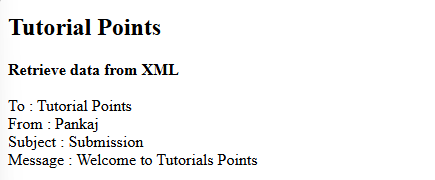
This tutorial demonstrates how to efficiently process XML documents using PHP. XML (eXtensible Markup Language) is a versatile text-based markup language designed for both human readability and machine parsing. It's commonly used for data storage an
 Explain JSON Web Tokens (JWT) and their use case in PHP APIs.
Apr 05, 2025 am 12:04 AM
Explain JSON Web Tokens (JWT) and their use case in PHP APIs.
Apr 05, 2025 am 12:04 AM
JWT is an open standard based on JSON, used to securely transmit information between parties, mainly for identity authentication and information exchange. 1. JWT consists of three parts: Header, Payload and Signature. 2. The working principle of JWT includes three steps: generating JWT, verifying JWT and parsing Payload. 3. When using JWT for authentication in PHP, JWT can be generated and verified, and user role and permission information can be included in advanced usage. 4. Common errors include signature verification failure, token expiration, and payload oversized. Debugging skills include using debugging tools and logging. 5. Performance optimization and best practices include using appropriate signature algorithms, setting validity periods reasonably,
 PHP Program to Count Vowels in a String
Feb 07, 2025 pm 12:12 PM
PHP Program to Count Vowels in a String
Feb 07, 2025 pm 12:12 PM
A string is a sequence of characters, including letters, numbers, and symbols. This tutorial will learn how to calculate the number of vowels in a given string in PHP using different methods. The vowels in English are a, e, i, o, u, and they can be uppercase or lowercase. What is a vowel? Vowels are alphabetic characters that represent a specific pronunciation. There are five vowels in English, including uppercase and lowercase: a, e, i, o, u Example 1 Input: String = "Tutorialspoint" Output: 6 explain The vowels in the string "Tutorialspoint" are u, o, i, a, o, i. There are 6 yuan in total
 Explain late static binding in PHP (static::).
Apr 03, 2025 am 12:04 AM
Explain late static binding in PHP (static::).
Apr 03, 2025 am 12:04 AM
Static binding (static::) implements late static binding (LSB) in PHP, allowing calling classes to be referenced in static contexts rather than defining classes. 1) The parsing process is performed at runtime, 2) Look up the call class in the inheritance relationship, 3) It may bring performance overhead.
 What are PHP magic methods (__construct, __destruct, __call, __get, __set, etc.) and provide use cases?
Apr 03, 2025 am 12:03 AM
What are PHP magic methods (__construct, __destruct, __call, __get, __set, etc.) and provide use cases?
Apr 03, 2025 am 12:03 AM
What are the magic methods of PHP? PHP's magic methods include: 1.\_\_construct, used to initialize objects; 2.\_\_destruct, used to clean up resources; 3.\_\_call, handle non-existent method calls; 4.\_\_get, implement dynamic attribute access; 5.\_\_set, implement dynamic attribute settings. These methods are automatically called in certain situations, improving code flexibility and efficiency.
