


 Technology peripheralsAIExploring future autonomous driving technology: 4D millimeter wave radar
Exploring future autonomous driving technology: 4D millimeter wave radar

The current realization of self-driving car perception is inseparable from sensing equipment such as lidar, on-board cameras, and millimeter-wave radar installed on the vehicle. By collecting data on the traffic environment around the vehicle, self-driving cars can surpass or even surpass humans. eyes to perceive the surrounding world and provide more accurate and rich environmental information for the decision-making and planning module, so that self-driving cars can drive safely.

The stacking of sensor hardware allows self-driving cars to drive more safely on the road, but on the other hand, a single hardware device cannot obtain all required data. , and in many extreme environments, hardware equipment will also have problems. For example, in extreme weather such as heavy fog and heavy rain, the measured data of lidar will have large deviations; millimeter-wave radar does not have the ability to measure altitude, and it is difficult to judge the stationary position ahead. Whether the object is on the ground or in the air; on-board cameras can only capture 2D plane images. Even with the assistance of deep learning, they still cannot accurately measure the distance between surrounding objects and self-driving cars. Therefore, self-driving cars require different hardware equipment. Working simultaneously, autonomous vehicles can achieve perception accuracy and capabilities that are no less than those of humans under any circumstances. The emergence of 4D millimeter wave radar will bring revolutionary changes to autonomous driving.
What is 4D millimeter wave radar
In autonomous driving perception, millimeter wave radar, as one of the most important sensors in autonomous driving, is a crucial one. ring. However, because it does not have the ability to measure height, it is difficult to determine whether the stationary object ahead is on the ground or in the air. When encountering ground or air objects such as manhole covers, speed bumps, overpasses, traffic signs, etc., it is impossible to accurately measure the height data of the object. . The emergence of 4D millimeter wave radar will make up for this problem. 4D millimeter wave radar is also called imaging radar. Based on the original distance, speed, and direction data, it adds a high degree of analysis of the target, and the fourth Dimensions are integrated into traditional millimeter wave radar to better understand and map the environment, making the measured traffic data more accurate.

As early as 2020, Tesla announced that it would add a 4D sensor technology to Tesla cars. Through 4D sensor technology, existing work The range is tripled for more traffic information. 4D millimeter wave radar can effectively analyze the contours, behaviors and categories of measured targets. It can adapt to more complex roads and identify more small objects, blocked objects and monitoring of stationary or horizontal objects, so that it can accurately understand the needs of vehicles. Under what circumstances should you brake? Compared with 3D millimeter wave radar, which can only measure three data: azimuth angle, elevation angle and speed, 4D millimeter wave radar can obtain more data, thus providing more reliable information for decision-making and planning.
Solution of 4D millimeter wave radar
4D millimeter wave radar was first proposed by an Israeli company in 2019. In early 2020, Waymo announced its fifth-generation autonomous driving 4D millimeter wave radar is launched in the perception suite. In the same year, Continental launched the first 4D millimeter wave radar mass production solution and stated that BMW would be the first car company to implement it. At 2021CES, 4D millimeter wave radar is also gaining momentum. Many manufacturers have unveiled their products. Texas Instruments, Mobileye and other companies have successively launched or updated 4D millimeter wave radar solutions.
Last year, Aptiv unveiled its next-generation L1~L3 autonomous driving platform, claiming that its sensor suite included 4D millimeter wave radar; ZF said it had obtained a production order for 4D millimeter wave radar from SAIC Group , will be officially supplied in 2022; Bosch launches the 5th generation radar extreme version, namely 4D millimeter wave radar, for the first time in the Chinese market.
4D millimeter wave radar, like traditional radar, will not experience great deviations when working under extreme weather conditions, and after increasing the elevation angle, it can form point cloud images, which means that 4D millimeter wave radar The radar can not only detect the distance, relative speed and azimuth of the object, but also detect the vertical height of the object in front as well as stationary and laterally moving objects in front, which will make up for the shortcomings of traditional radar in detecting static targets. At present, there are two main technical solutions for 4D millimeter wave radar:
- One is for 4D millimeter wave radar companies to independently develop multi-channel array radio frequency chipsets, radar processor chips and post-processing software algorithms based on artificial intelligence.
- The other is a solution based on traditional radar chip suppliers, which uses multi-chip extreme connection or software algorithms to achieve dense point cloud output and recognition.
The main feature of 4D millimeter wave radar is that the angular resolution is very high. The angular resolution of the front 4D millimeter wave radar can reach 1 degree in azimuth and 2 degrees in elevation. , when a self-driving car equipped with 4D millimeter wave radar detects road information, it can directly detect the outline of objects around the vehicle. For example, when road information is relatively rich, such as when pedestrians and vehicles are mixed together, 4D millimeter wave radar can directly identify pedestrians and vehicles, and can determine the movement of the corresponding objects (whether they are moving and the direction of movement).
4D millimeter wave radar can also detect geometric shapes, such as the length and width of tunnels in tunnel scenes. The emergence of 4D millimeter wave radar has made up for the performance shortcomings of traditional millimeter wave radar in a targeted manner. It not only increases the dimension of 3D, but also brings about comprehensive upgrades in detection accuracy, sensitivity, resolution and performance, giving autonomous driving more capabilities. High safety is expected to make millimeter wave radar one of the core sensors in autonomous driving systems.
The future development trend of 4D millimeter wave radar
According to analysis by industry insiders, the large-scale implementation of 4D millimeter wave radar is coming soon. In terms of marketization, the current technology is becoming mature, and there are many innovative algorithms in the process of productization. Many car manufacturers already have requirements for equipping new vehicles. Among them, automatic parking and L3 and above level autonomous driving require 4D imaging. In fact, since last year, many 4D millimeter wave radar products have been installed in vehicles for road testing. and prepare for mass production.

For example, NXP announced that the industry’s first dedicated 16nm millimeter wave radar processor S32R45 will be used for customer mass production for the first time starting in the first half of the year. Mobileye, a subsidiary of Intel, is also actively promoting the development and application of 4D millimeter wave radar. Mobileye CEO Amnon Shashua emphasized the application scenarios of 4D imaging millimeter wave radar in automobiles in this year's CES speech.
He said: "By 2025, except for the front of the car, we only want millimeter-wave radar, not lidar." In Mobileye's plan, millimeter-wave radar-based radar will be launched by 2025 /Lidar's consumer-grade autonomous vehicle solution, the car is equipped with a radar-LiDAR subsystem, and the vehicle only needs to be equipped with a forward-facing lidar and a 360-degree fully-covered millimeter-wave radar to achieve autonomous driving tasks.
Autonomous driving technology cannot rely on a single sensor to dominate the world and become an industry consensus. According to the current market understanding of autonomous driving, there is no one-size-fits-all sensor, because the market has many segments and different levels of autonomous driving. In the end, it is very likely that cameras and radars will coexist because their advantages and disadvantages are very complementary. What is special is lidar. The author believes that there is a great possibility that 4D millimeter wave radar solutions can reduce or replace the use of lidar. 4D millimeter wave radar is still in the early stages of development, but the author believes that its performance will be greatly improved in the future, and under ideal circumstances, it can eventually replace lidar. ”
The above is the detailed content of Exploring future autonomous driving technology: 4D millimeter wave radar. For more information, please follow other related articles on the PHP Chinese website!

 How to Run LLM Locally Using LM Studio? - Analytics VidhyaApr 19, 2025 am 11:38 AM
Running large language models at home with ease: LM Studio User Guide In recent years, advances in software and hardware have made it possible to run large language models (LLMs) on personal computers. LM Studio is an excellent tool to make this process easy and convenient. This article will dive into how to run LLM locally using LM Studio, covering key steps, potential challenges, and the benefits of having LLM locally. Whether you are a tech enthusiast or are curious about the latest AI technologies, this guide will provide valuable insights and practical tips. Let's get started! Overview Understand the basic requirements for running LLM locally. Set up LM Studi on your computer
 Guy Peri Helps Flavor McCormick's Future Through Data TransformationApr 19, 2025 am 11:35 AM
Guy Peri is McCormick’s Chief Information and Digital Officer. Though only seven months into his role, Peri is rapidly advancing a comprehensive transformation of the company’s digital capabilities. His career-long focus on data and analytics informs
 What is the Chain of Emotion in Prompt Engineering? - Analytics VidhyaApr 19, 2025 am 11:33 AM
Introduction Artificial intelligence (AI) is evolving to understand not just words, but also emotions, responding with a human touch. This sophisticated interaction is crucial in the rapidly advancing field of AI and natural language processing. Th
 12 Best AI Tools for Data Science Workflow - Analytics VidhyaApr 19, 2025 am 11:31 AM
Introduction In today's data-centric world, leveraging advanced AI technologies is crucial for businesses seeking a competitive edge and enhanced efficiency. A range of powerful tools empowers data scientists, analysts, and developers to build, depl
 AV Byte: OpenAI's GPT-4o Mini and Other AI InnovationsApr 19, 2025 am 11:30 AM
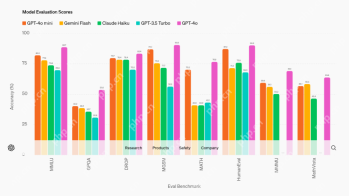
This week's AI landscape exploded with groundbreaking releases from industry giants like OpenAI, Mistral AI, NVIDIA, DeepSeek, and Hugging Face. These new models promise increased power, affordability, and accessibility, fueled by advancements in tr
 Perplexity's Android App Is Infested With Security Flaws, Report FindsApr 19, 2025 am 11:24 AM
But the company’s Android app, which offers not only search capabilities but also acts as an AI assistant, is riddled with a host of security issues that could expose its users to data theft, account takeovers and impersonation attacks from malicious
 Everyone's Getting Better At Using AI: Thoughts On Vibe CodingApr 19, 2025 am 11:17 AM
You can look at what’s happening in conferences and at trade shows. You can ask engineers what they’re doing, or consult with a CEO. Everywhere you look, things are changing at breakneck speed. Engineers, and Non-Engineers What’s the difference be
 Rocket Launch Simulation and Analysis using RocketPy - Analytics VidhyaApr 19, 2025 am 11:12 AM
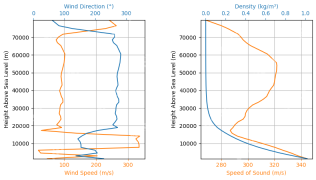
Simulate Rocket Launches with RocketPy: A Comprehensive Guide This article guides you through simulating high-power rocket launches using RocketPy, a powerful Python library. We'll cover everything from defining rocket components to analyzing simula


Hot AI Tools

Undresser.AI Undress
AI-powered app for creating realistic nude photos

AI Clothes Remover
Online AI tool for removing clothes from photos.

Undress AI Tool
Undress images for free

Clothoff.io
AI clothes remover

AI Hentai Generator
Generate AI Hentai for free.

Hot Article
Hot Tools

SecLists
SecLists is the ultimate security tester's companion. It is a collection of various types of lists that are frequently used during security assessments, all in one place. SecLists helps make security testing more efficient and productive by conveniently providing all the lists a security tester might need. List types include usernames, passwords, URLs, fuzzing payloads, sensitive data patterns, web shells, and more. The tester can simply pull this repository onto a new test machine and he will have access to every type of list he needs.

WebStorm Mac version
Useful JavaScript development tools

ZendStudio 13.5.1 Mac
Powerful PHP integrated development environment

Safe Exam Browser
Safe Exam Browser is a secure browser environment for taking online exams securely. This software turns any computer into a secure workstation. It controls access to any utility and prevents students from using unauthorized resources.

MinGW - Minimalist GNU for Windows
This project is in the process of being migrated to osdn.net/projects/mingw, you can continue to follow us there. MinGW: A native Windows port of the GNU Compiler Collection (GCC), freely distributable import libraries and header files for building native Windows applications; includes extensions to the MSVC runtime to support C99 functionality. All MinGW software can run on 64-bit Windows platforms.

