


 Web Front-endJS TutorialDetailed explanation of how JavaScript functions implement variable parameters? (Summary sharing)
Detailed explanation of how JavaScript functions implement variable parameters? (Summary sharing)

JS is a weakly typed language and cannot use the param keyword to declare that the formal parameter is a variable parameter like C#. So how to implement this variable parameter in js? The following article will talk about the implementation method of JavaScript function variable parameters. I hope it will be helpful to everyone!

Implementation of JS variable parameters 1: arguments
What are arguments? How to implement variable parameters?
arguments is an array-like object corresponding to the arguments passed to the function.
In ES5, you can use the arguments object to implement variable parameters.
The length of the arguments object is determined by the number of actual parameters rather than the number of formal parameters. Formal parameters are variables that are re-opened in memory space within the function, but they do not overlap with the memory space of the arguments object. When both arguments and values exist, the two values are synchronized, but when one of them has no value, the value will not be synchronized for this valueless case.
<script>
function dynamicArgs() {
	var info = "今日签到的学生有:";
	for (let i = 0; i < arguments.length ; i ++) {
		if (i > 0) {
			info += ",";
		}
		info += arguments[i];
	}

	console.log(info);
}

dynamicArgs("张三", "李四");
dynamicArgs("张三", "李四", "王五", "马六");
dynamicArgs(["张三", "李四", "王五", "马六", "jack", "rose"]);
</script>
The parameters are not sure, so just don’t write them down.
You can write N multiple parameters when calling, or you can pass an array directly.
Execution effect:

Summary:
1. It can be seen from the function definition , if variable parameters arguments are used in the function, there is no need to write formal parameters
2. When calling a function, multiple actual parameters
arguments objects can be passed directly to the function are local variables available in all (non-arrow) functions. You can use the arguments object to reference a function's arguments within a function. This object contains each argument passed to the function, with the first argument at index 0. For example, if a function is passed three arguments, you can reference them like this:
arguments[0]
arguments[1]
arguments[2]
Parameters can also be set:
arguments[0] = 'value';
arguments is an object, is not an Array. It is similar to Array, but does not have any Array properties except the length attribute and the index element. For example, it has no pop method. But it can be converted to a real Array:
So you can often see code like this:
// 由于arguments不是 Array,所以无法使用 Array 的方法,所以通过这种方法转换为数组

var args = [].slice.call(arguments);  // 方式一
var args = Array.prototype.slice.call(arguments); // 方式二

// 下面是 es6 提供的语法
let args = Array.from(arguments)   // 方式一
let args = [...arguments]; // 方式二
arguments# Properties on <span style="font-size: 16px;"></span>
- ##arguments.callee: Points to the currently executing function (in strict mode, ECMAScript version 5 (
- ES5 ) Prohibited use of a
rguments.callee()<strong></strong>)argunments.length: Points to the number of arguments passed to the current function - arguments. caller: Removed
arguments combined with remaining parameters, default parameters and destructed assignment parameters<span style="font-size: 16px;"></span>
1) in strict In mode, the existence of remaining parameters, default parameters and destructed assignment parameters will not change the behavior of thearguments object, but it is different in non-strict mode
function func(a) {
  arguments[0] = 99;   // 更新了arguments[0] 同样更新了a
  console.log(a);
}
func(10); // 99

// 并且

function func(a) {
  a = 99;              // 更新了a 同样更新了arguments[0]
  console.log(arguments[0]);
}
func(10); // 99
2) When it is not Functions in strict mode do not contain remaining parameters, default parameters, and destructuring assignments, then the value in the arguments object will track the value of the parameter (and vice versa) . Look at the following code:
function func(a = 55) {
  arguments[0] = 99; // updating arguments[0] does not also update a
  console.log(a);
}
func(10); // 10

//

function func(a = 55) {
  a = 99; // updating a does not also update arguments[0]
  console.log(arguments[0]);
}
func(10); // 10


function func(a = 55) {
  console.log(arguments[0]);
}
func(); // undefined
Implementation of JS variable parameters 2: rest parameter (...)
The rest parameter was introduced in the ES6 standard (The form is ...variable name), used to obtain the extra parameters of the function. The variable matched with the rest parameter is an array, which puts the extra parameters into the array. Very suitable for dealing with variable length parameters.
Implementation syntax of variable parameters:
function f(a, b, ...theArgs) {
  // ...
}
- theArgs starts with "...", it is an array, and its value comes from The actual caller passes in [0, theArgs.length) (index range: 0 to theArgs.length-1)
Note: There cannot be any other parameters after the rest parameter (that is, it can only be the last parameter), otherwise an error will be reported.
function f(arg1, ...rest, arg2) { // arg2 after ...rest ?!
  // error
}
Distinguish between rest parameters and parameter (arguments) objects
- rest parameters will not be used for each The variable is given a separate name, and the parameter object contains all the parameters passed to the function
- The parameter object is not a real array, and the rest parameter is a real array instance. For example, array sort, map, forEach, and pop methods can be used directly
- The parameter object has its own additional characteristics (such as the callee attribute)
Rest参数的引入减少样式代码
//以前函数
function f(a, b) {
  var args = Array.prototype.slice.call(arguments, f.length);

  // …
}

// 等效于现在

function f(a, b, ...args) {

}
Rest参数可以被解构(通俗一点,将rest参数的数据解析后一一对应)不要忘记参数用[] 括起来,因为它数组嘛
function f(...[a, b, c]) {
  return a + b + c;
}

f(1)          //NaN 因为只传递一个值,其实需要三个值
f(1, 2, 3)    // 6
f(1, 2, 3, 4) // 6 (第四值没有与之对应的变量名)
示例
1、计算参数和
function sumAll(...args) { // args 是数组的名称
  let sum = 0;

  for (let arg of args) sum += arg;

  return sum;
}

console.log( sumAll(1) ); // 1
console.log( sumAll(1, 2) ); // 3
console.log( sumAll(1, 2, 3) ); // 6
2、每个参数乘以2
function multiply(multiplier, ...theArgs) {
  return theArgs.map(function(element) {
    return multiplier * element;
  });
}

var arr = multiply(2, 1, 2, 3);
console.log(arr); // [2, 4, 6]
3、排序
function sortRestArgs(...theArgs) {
  var sortedArgs = theArgs.sort();
  return sortedArgs;
}
//好像一位和两位混合不能进行排序,这需要看一下为甚?主要第一个为主
console.log(sortRestArgs(5, 3, 7, 1)); // shows 1, 3, 5, 7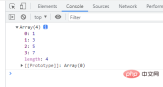
对比:参数对象arguments不能排序
function sortArguments() {
  //arguments是参数对象不能直接使用sort()方法,因为不是数组实例,需要转换
  var sortedArgs = arguments.sort();
  return sortedArgs; // this will never happen
}

// 会抛出类型异常,arguments.sort不是函数
console.log(sortArguments(5, 3, 7, 1));?x-oss-process=image/resize,p_40 "165959466228913Detailed explanation of how JavaScript functions implement variable parameters? (Summary sharing)")
【相关推荐:javascript学习教程 、编程视频】
The above is the detailed content of Detailed explanation of how JavaScript functions implement variable parameters? (Summary sharing). For more information, please follow other related articles on the PHP Chinese website!

 Python vs. JavaScript: The Learning Curve and Ease of UseApr 16, 2025 am 12:12 AM
Python is more suitable for beginners, with a smooth learning curve and concise syntax; JavaScript is suitable for front-end development, with a steep learning curve and flexible syntax. 1. Python syntax is intuitive and suitable for data science and back-end development. 2. JavaScript is flexible and widely used in front-end and server-side programming.
 Python vs. JavaScript: Community, Libraries, and ResourcesApr 15, 2025 am 12:16 AM
Python and JavaScript have their own advantages and disadvantages in terms of community, libraries and resources. 1) The Python community is friendly and suitable for beginners, but the front-end development resources are not as rich as JavaScript. 2) Python is powerful in data science and machine learning libraries, while JavaScript is better in front-end development libraries and frameworks. 3) Both have rich learning resources, but Python is suitable for starting with official documents, while JavaScript is better with MDNWebDocs. The choice should be based on project needs and personal interests.
 From C/C to JavaScript: How It All WorksApr 14, 2025 am 12:05 AM
The shift from C/C to JavaScript requires adapting to dynamic typing, garbage collection and asynchronous programming. 1) C/C is a statically typed language that requires manual memory management, while JavaScript is dynamically typed and garbage collection is automatically processed. 2) C/C needs to be compiled into machine code, while JavaScript is an interpreted language. 3) JavaScript introduces concepts such as closures, prototype chains and Promise, which enhances flexibility and asynchronous programming capabilities.
 JavaScript Engines: Comparing ImplementationsApr 13, 2025 am 12:05 AM
Different JavaScript engines have different effects when parsing and executing JavaScript code, because the implementation principles and optimization strategies of each engine differ. 1. Lexical analysis: convert source code into lexical unit. 2. Grammar analysis: Generate an abstract syntax tree. 3. Optimization and compilation: Generate machine code through the JIT compiler. 4. Execute: Run the machine code. V8 engine optimizes through instant compilation and hidden class, SpiderMonkey uses a type inference system, resulting in different performance performance on the same code.
 Beyond the Browser: JavaScript in the Real WorldApr 12, 2025 am 12:06 AM
JavaScript's applications in the real world include server-side programming, mobile application development and Internet of Things control: 1. Server-side programming is realized through Node.js, suitable for high concurrent request processing. 2. Mobile application development is carried out through ReactNative and supports cross-platform deployment. 3. Used for IoT device control through Johnny-Five library, suitable for hardware interaction.
 Building a Multi-Tenant SaaS Application with Next.js (Backend Integration)Apr 11, 2025 am 08:23 AM
I built a functional multi-tenant SaaS application (an EdTech app) with your everyday tech tool and you can do the same. First, what’s a multi-tenant SaaS application? Multi-tenant SaaS applications let you serve multiple customers from a sing
 How to Build a Multi-Tenant SaaS Application with Next.js (Frontend Integration)Apr 11, 2025 am 08:22 AM
This article demonstrates frontend integration with a backend secured by Permit, building a functional EdTech SaaS application using Next.js. The frontend fetches user permissions to control UI visibility and ensures API requests adhere to role-base
 JavaScript: Exploring the Versatility of a Web LanguageApr 11, 2025 am 12:01 AM
JavaScript is the core language of modern web development and is widely used for its diversity and flexibility. 1) Front-end development: build dynamic web pages and single-page applications through DOM operations and modern frameworks (such as React, Vue.js, Angular). 2) Server-side development: Node.js uses a non-blocking I/O model to handle high concurrency and real-time applications. 3) Mobile and desktop application development: cross-platform development is realized through ReactNative and Electron to improve development efficiency.


Hot AI Tools

Undresser.AI Undress
AI-powered app for creating realistic nude photos

AI Clothes Remover
Online AI tool for removing clothes from photos.

Undress AI Tool
Undress images for free

Clothoff.io
AI clothes remover

AI Hentai Generator
Generate AI Hentai for free.

Hot Article
Hot Tools

VSCode Windows 64-bit Download
A free and powerful IDE editor launched by Microsoft

DVWA
Damn Vulnerable Web App (DVWA) is a PHP/MySQL web application that is very vulnerable. Its main goals are to be an aid for security professionals to test their skills and tools in a legal environment, to help web developers better understand the process of securing web applications, and to help teachers/students teach/learn in a classroom environment Web application security. The goal of DVWA is to practice some of the most common web vulnerabilities through a simple and straightforward interface, with varying degrees of difficulty. Please note that this software

SublimeText3 Linux new version
SublimeText3 Linux latest version

Dreamweaver CS6
Visual web development tools

MantisBT
Mantis is an easy-to-deploy web-based defect tracking tool designed to aid in product defect tracking. It requires PHP, MySQL and a web server. Check out our demo and hosting services.

