



The

javascript column will list five tips to make your code more readable and easier to maintain.
When editing old projects, have you ever encountered confusing code that "shatters" as soon as new logic is added? Of course we've all been there.
In order to save the world from unreadable Javascript code, I have to show you the following five examples - my pillar of shame.
Use array destructuring to obtain multiple return values of a function
If we have a function that returns multiple values, we can use array destructuring to obtain the value. The code is as follows:
const func = () => {  const a = 1;  const b = 2;  const c = 3;  const d = 4;
  return [a,b,c,d];
}const [a,b,c,d] = func();console.log(a,b,c,d); // Outputs: 1,2,3,4复制代码
Although the above method can achieve assignment, it has some side effects.
When calling a function to get the return value a,b,c,d, we need to pay attention to the order in which the return value is returned. A small mistake here may be your debugging nightmare.
In addition to paying attention to the order, we can't just get a few of the return values we want. What if I only want c,d?
const func = () => {  const a = 1;  const b = 2;  const c = 3;  const d = 4;  return {a,b,c,d};
}const {c,d} = func();复制代码
We can use object destructuring assignment to replace it.
const func = () => {  const a = 1;  const b = 2;  const c = 3;  const d = 4;  return {a,b,c,d};
}const {c,d} = func();复制代码
Now we can freely choose which function return values we need.
In the future, even if the function adds more return values, the object destructuring code can remain unchanged, making the code more stable.
No object destructuring is used in function input parameters
Suppose we have a function whose input parameter is an object, and the code within the function needs to use the properties of this object. A naive implementation is as follows:
// badfunction getDaysRemaining(subscription) {  const startDate = subscription.startDate;  const endDate = subscription.endDate;  return endDate - startDate;
}复制代码
Although this solution meets our needs, it declares two unnecessary temporary reference variables startDate and endDate.
A better solution is to use object destructuring to obtain the input parameters startDate and endDate in one line.
// betterfunction getDaysRemaining(subscription) {  const { startDate, endDate } = subscription;  return startDate - endDate;
}复制代码
We can even use object destructuring to define these two variables directly in the input parameters.
// even betterfunction getDaysRemaining({ startDate, endDate }) {  return startDate - endDate;
}
Much more elegant wouldn’t you agree?复制代码
Don’t you think this is more elegant?
Copy the array without using expansion syntax (...)
Use for Looping through the elements and then copying them to a new array is not only cumbersome but also ugly.
Using expansion syntax can make the implementation clearer and more concise.
const stuff = [1,2,3];// badconst stuffCopyBad = []for(let i = 0; i < stuff.length; i++){
  stuffCopyBad[i] = stuff[i];
}// goodconst stuffCopyGood = [...stuff];复制代码
Use Var
Use const to ensure that a variable cannot be reassigned, which can reduce bugs and improve code readability.
// badvar x = "badX";var y = "baxY";// goodconst x = "goodX";const y = "goodX";复制代码
If you really need to reassign a variable, always prefer let over var .
If you really need to reassign a variable, use let instead of var.
let works at block scope, while var works at function scope.
Block scope makes the variable only valid in the code block in which it is defined. Accessing the variable outside the block scope will prompt a ReferenceError.
for(let i = 0; i < 10; i++){  //something}
print(i) // ReferenceError: i is not defined复制代码
Variables defined in function scope can be used within the scope of the function in which it is defined. Both
for(var i = 0; i < 10; i++){ //something}console.log(i) // Outputs 10复制代码let and const defined variables can be accessed in the block scope.
Not using template strings
Manually splicing strings is very complicated to write and confusing to read. See example:
// badfunction printStartAndEndDate({ startDate, endDate }) {  console.log('StartDate:' + startDate + ',EndDate:' + endDate)
}复制代码
Template strings provide a clear and readable way to insert variables into strings.
// goodfunction printStartAndEndDate({ startDate, endDate }) {  console.log(`StartDate: ${startDate}, EndDate: ${endDate}`)
}复制代码
Template strings provide a simple way to wrap lines. You only need to press the enter key on the keyboard, just like you usually use (in the system).
// prints on two linesfunction printStartAndEndDate({ startDate, endDate }) {  console.log(`StartDate: ${startDate}
  EndDate: ${endDate}`)
}复制代码
More related free learning recommendations: javascript(Video)
The above is the detailed content of Avoid these five Javascript mistakes. For more information, please follow other related articles on the PHP Chinese website!

 From C/C to JavaScript: How It All WorksApr 14, 2025 am 12:05 AM
The shift from C/C to JavaScript requires adapting to dynamic typing, garbage collection and asynchronous programming. 1) C/C is a statically typed language that requires manual memory management, while JavaScript is dynamically typed and garbage collection is automatically processed. 2) C/C needs to be compiled into machine code, while JavaScript is an interpreted language. 3) JavaScript introduces concepts such as closures, prototype chains and Promise, which enhances flexibility and asynchronous programming capabilities.
 JavaScript Engines: Comparing ImplementationsApr 13, 2025 am 12:05 AM
Different JavaScript engines have different effects when parsing and executing JavaScript code, because the implementation principles and optimization strategies of each engine differ. 1. Lexical analysis: convert source code into lexical unit. 2. Grammar analysis: Generate an abstract syntax tree. 3. Optimization and compilation: Generate machine code through the JIT compiler. 4. Execute: Run the machine code. V8 engine optimizes through instant compilation and hidden class, SpiderMonkey uses a type inference system, resulting in different performance performance on the same code.
 Beyond the Browser: JavaScript in the Real WorldApr 12, 2025 am 12:06 AM
JavaScript's applications in the real world include server-side programming, mobile application development and Internet of Things control: 1. Server-side programming is realized through Node.js, suitable for high concurrent request processing. 2. Mobile application development is carried out through ReactNative and supports cross-platform deployment. 3. Used for IoT device control through Johnny-Five library, suitable for hardware interaction.
 Building a Multi-Tenant SaaS Application with Next.js (Backend Integration)Apr 11, 2025 am 08:23 AM
I built a functional multi-tenant SaaS application (an EdTech app) with your everyday tech tool and you can do the same. First, what’s a multi-tenant SaaS application? Multi-tenant SaaS applications let you serve multiple customers from a sing
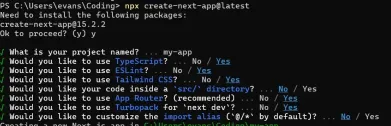 How to Build a Multi-Tenant SaaS Application with Next.js (Frontend Integration)Apr 11, 2025 am 08:22 AM
This article demonstrates frontend integration with a backend secured by Permit, building a functional EdTech SaaS application using Next.js. The frontend fetches user permissions to control UI visibility and ensures API requests adhere to role-base
 JavaScript: Exploring the Versatility of a Web LanguageApr 11, 2025 am 12:01 AM
JavaScript is the core language of modern web development and is widely used for its diversity and flexibility. 1) Front-end development: build dynamic web pages and single-page applications through DOM operations and modern frameworks (such as React, Vue.js, Angular). 2) Server-side development: Node.js uses a non-blocking I/O model to handle high concurrency and real-time applications. 3) Mobile and desktop application development: cross-platform development is realized through ReactNative and Electron to improve development efficiency.
 The Evolution of JavaScript: Current Trends and Future ProspectsApr 10, 2025 am 09:33 AM
The latest trends in JavaScript include the rise of TypeScript, the popularity of modern frameworks and libraries, and the application of WebAssembly. Future prospects cover more powerful type systems, the development of server-side JavaScript, the expansion of artificial intelligence and machine learning, and the potential of IoT and edge computing.
 Demystifying JavaScript: What It Does and Why It MattersApr 09, 2025 am 12:07 AM
JavaScript is the cornerstone of modern web development, and its main functions include event-driven programming, dynamic content generation and asynchronous programming. 1) Event-driven programming allows web pages to change dynamically according to user operations. 2) Dynamic content generation allows page content to be adjusted according to conditions. 3) Asynchronous programming ensures that the user interface is not blocked. JavaScript is widely used in web interaction, single-page application and server-side development, greatly improving the flexibility of user experience and cross-platform development.


Hot AI Tools

Undresser.AI Undress
AI-powered app for creating realistic nude photos

AI Clothes Remover
Online AI tool for removing clothes from photos.

Undress AI Tool
Undress images for free

Clothoff.io
AI clothes remover

AI Hentai Generator
Generate AI Hentai for free.

Hot Article
Hot Tools

SecLists
SecLists is the ultimate security tester's companion. It is a collection of various types of lists that are frequently used during security assessments, all in one place. SecLists helps make security testing more efficient and productive by conveniently providing all the lists a security tester might need. List types include usernames, passwords, URLs, fuzzing payloads, sensitive data patterns, web shells, and more. The tester can simply pull this repository onto a new test machine and he will have access to every type of list he needs.

SublimeText3 Linux new version
SublimeText3 Linux latest version

Atom editor mac version download
The most popular open source editor

MinGW - Minimalist GNU for Windows
This project is in the process of being migrated to osdn.net/projects/mingw, you can continue to follow us there. MinGW: A native Windows port of the GNU Compiler Collection (GCC), freely distributable import libraries and header files for building native Windows applications; includes extensions to the MSVC runtime to support C99 functionality. All MinGW software can run on 64-bit Windows platforms.

SublimeText3 Mac version
God-level code editing software (SublimeText3)

