


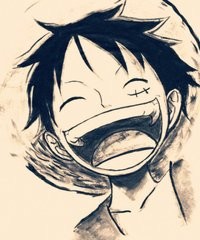
This article mainly introduces the sample code for realizing hexagonal images with CSS. The content is quite good. I will share it with you now and give it as a reference.
This article mainly introduces the sample code for realizing hexagonal images with css and shares it with everyone. The details are as follows:
Without talking about anything else, let’s talk about the effects first:

Using a simple p with pseudo elements, you can 'draw' this hexagonal picture. The principle is that three p's of the same width and height are assembled into a hexagon through positioning and rotation, and then used Background images are layered to form a visually complete image. Let’s implement it step by step.
(1) Then the first step is, of course, to draw the container. The container is a p with width and height.
Before drawing, you must understand a problem, that is, an equilateral hexagon is made up of three p’s with the same width and height (as shown in the figure below), so the width and height of p must satisfy √ Only three times the conditions can be used to form a regular hexagon. I won’t show you how to calculate this value here. If you are interested, you can use trigonometric functions to calculate it yourself in private.

Here, I set the width of the outer container to 190px, the height to 110px, and then set the background image. The code is as follows
<!DOCTYPE html>
<html lang="en">
<head>
<meta charset="UTF-8">
<title>Document</title>
</head>
<style>
.wrap{
height:110px;
width: 190px;
position: relative;
margin: 200px auto;
background: url('./eddie.jpg') 50% 50% no-repeat;
background-size: auto 220px;
}
</style>
<body>
<p class='wrap'>
</p>
</body>
</html>The effect is a picture

(2) In the second step, draw the left p and its pseudo-element picture
In this step, use the new p to position and rotate the left side of the hexagon, and set the width and height of the new p pseudo-element and set a background image consistent with the above picture. Note that the width and height of the new p pseudo-element are the entire The width and height of the hexagon. Then rotate the pseudo element to display the picture vertically (the new p should be rotated, so the pseudo element picture is also rotated, so it needs to be reversely rotated back to the normal angle) and the position of the pseudo element must be adjusted (the new p is rotated, which affects the positioning of the pseudo element) position), and finally set the new p to exceed the hidden value, and the left side of the hexagon will be drawn
<!DOCTYPE html>
<html lang="en">
<head>
<meta charset="UTF-8">
<title>Document</title>
</head>
<style>
.wrap{
height:110px;
width: 190px;
position: relative;
margin: 200px auto;
background: url('./eddie.jpg') 50% 50% no-repeat;
background-size: auto 220px;
}
.common{
position: absolute;
height: 100%;
width: 100%;
overflow: hidden;
left:0;
23
}
.common:before{
content:'';
position: absolute;
background:url('./eddie.jpg') 50% 50% no-repeat;
background-size: auto 220px;
width: 190px;
height: 220px;
}
.left{
transform: rotate(60deg);
}
.left:before{
transform: rotate(-60deg) translate(48px,-28px);
}
</style>
<body>
<p class='wrap'>
<p class='left common'></p>
</p>
</body>
</html>The effect is as follows:

(3) Third Step 1: Draw p on the right and its pseudo-element image
The principle of this step is the same as the second part, except that the angle is reversed, so I won’t go into details and go directly to the complete code
<!DOCTYPE html>
<html lang="en">
<head>
<meta charset="UTF-8">
<title>Document</title>
</head>
<style>
.wrap{
height:110px;
width: 190px;
position: relative;
margin: 200px auto;
background: url('./eddie.jpg') 50% 50% no-repeat;
background-size: auto 220px;
}
.common{
position: absolute;
height: 100%;
width: 100%;
overflow: hidden;
left:0;
}
.common:before{
content:'';
position: absolute;
background:url('./eddie.jpg') 50% 50% no-repeat;
background-size: auto 220px;
width: 190px;
height: 220px;
}
.left{
transform: rotate(60deg);
}
.left:before{
transform: rotate(-60deg) translate(48px,-28px);
}
.right{
transform: rotate(-60deg);
}
.right:before{
transform: rotate(60deg) translate(48px,28px);
bottom: 0;
}
</style>
<body>
<p class='wrap'>
<p class='left common'></p>
<p class='right common'></p>
</p>
</body>
</html>So far , you can display the picture at the beginning of the article. Using this principle, you can also create various other shapes of picture display effects. Welcome to continue your research. In the future, picture display will no longer be a single brick line! !
The above is the entire content of this article. I hope it will be helpful to everyone's study. For more related content, please pay attention to the PHP Chinese website!
Related recommendations:
Use css3 to achieve ripple effects and H5 to achieve dynamic wave effects
How to set up CSS
Text font color
How to draw a circle loading circle animation using css3
The above is the detailed content of About the method of realizing hexagonal picture in css. For more information, please follow other related articles on the PHP Chinese website!

 Where should 'Subscribe to Podcast' link to?Apr 16, 2025 pm 12:04 PM
For a while, iTunes was the big dog in podcasting, so if you linked "Subscribe to Podcast" to like:
 Browser Engine DiversityApr 16, 2025 pm 12:02 PM
We lost Opera when they went Chrome in 2013. Same deal with Edge when it also went Chrome earlier this year. Mike Taylor called these changes a "Decreasingly
 UX Considerations for Web SharingApr 16, 2025 am 11:59 AM
From trashy clickbait sites to the most august of publications, share buttons have long been ubiquitous across the web. And yet it is arguable that these
 Weekly Platform News: Apple Deploys Web Components, Progressive HTML Rendering, Self-Hosting Critical ResourcesApr 16, 2025 am 11:55 AM
In this week's roundup, Apple gets into web components, how Instagram is insta-loading scripts, and some food for thought for self-hosting critical resources.
 Git Pathspecs and How to Use ThemApr 16, 2025 am 11:53 AM
When I was looking through the documentation of git commands, I noticed that many of them had an option for . I initially thought that this was just a
 A Color Picker for Product ImagesApr 16, 2025 am 11:49 AM
Sounds kind of like a hard problem doesn't it? We often don't have product shots in thousands of colors, such that we can flip out the with . Nor do we
 A Dark Mode Toggle with React and ThemeProviderApr 16, 2025 am 11:46 AM
I like when websites have a dark mode option. Dark mode makes web pages easier for me to read and helps my eyes feel more relaxed. Many websites, including
 Some Hands-On with the HTML Dialog ElementApr 16, 2025 am 11:33 AM
This is me looking at the HTML element for the first time. I've been aware of it for a while, but haven't taken it for a spin yet. It has some pretty cool and


Hot AI Tools

Undresser.AI Undress
AI-powered app for creating realistic nude photos

AI Clothes Remover
Online AI tool for removing clothes from photos.

Undress AI Tool
Undress images for free

Clothoff.io
AI clothes remover

AI Hentai Generator
Generate AI Hentai for free.

Hot Article
Hot Tools

ZendStudio 13.5.1 Mac
Powerful PHP integrated development environment

DVWA
Damn Vulnerable Web App (DVWA) is a PHP/MySQL web application that is very vulnerable. Its main goals are to be an aid for security professionals to test their skills and tools in a legal environment, to help web developers better understand the process of securing web applications, and to help teachers/students teach/learn in a classroom environment Web application security. The goal of DVWA is to practice some of the most common web vulnerabilities through a simple and straightforward interface, with varying degrees of difficulty. Please note that this software

SublimeText3 English version
Recommended: Win version, supports code prompts!

WebStorm Mac version
Useful JavaScript development tools

SublimeText3 Linux new version
SublimeText3 Linux latest version

