


java operation properties configuration file

There is a class Properties (Java.util.Properties) in Java, which is mainly used to read Java configuration files and store some values that may need to be changed in properties for configuration, usually as .properties files. , in fact, it is an ordinary text file. The format of the file content is the "key=value" format, and the text annotation information can be annotated with "#". Try to use UTF-8 format for storage. The classes provided by jdk itself have shortcomings, so we usually use the commons-configuration framework for analysis.
1.1.1. Properties class diagram
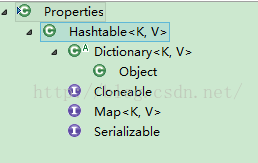
Properties configurationfileCommonly used methods
1. Use the getResourceAsStream(String name) method of the java.lang.Class class
InputStream in = getClass().getResourceAsStream("File name");
2. Use stream operation
InputStream in = new BufferedInputStream(new FileInputStream(filepath));
1.1.3. Disadvantages1. The format must be k=v without spaces.
2. Changed values cannot be refreshed regularly(For example, the online environment modification value program still reads the old value ). You need to write your own program control.
#3. The values are all of the string type and need to be converted according to needs when obtained by yourself.
Based on the above shortcomings, we can use the org.apache.commons.configuration class to solve the problem. The following is read in daily development propertiesEncapsulation.
1.1.4. Use of commons-configuration framework1.1.4.1. mavenPackage import
 <dependency>
        <groupId>commons-configuration</groupId>
        <artifactId>commons-configuration</artifactId>
        <version>1.8</version>
</dependency>package cn.xhgg.common.configuration;
import java.util.HashMap;
import java.util.Iterator;
import java.util.List;
import java.util.Map;
import java.util.concurrent.ConcurrentHashMap;
import org.apache.commons.configuration.ConfigurationException;
import org.apache.commons.configuration.PropertiesConfiguration;
import org.apache.commons.configuration.reloading.FileChangedReloadingStrategy;
import org.apache.commons.lang.StringUtils;
import org.slf4j.Logger;
import org.slf4j.LoggerFactory;
/**
* 这个类型的配置,文件首先需要有配置文件,其次配置文件应该写入该类,再则配置文件的编码方式必须是UTF8
*/
public class PropertiesConfigUtil {
private static Logger log = LoggerFactory.getLogger(PropertiesConfigUtil.class);
public static final String PROPS_SUFFIX = ".properties";
private static Map<String, PropertiesConfiguration> configMap = new ConcurrentHashMap<String, PropertiesConfiguration>();
private static PropertiesConfiguration getConfig(String configName) {
//去除空格
configName = configName.trim();
//有后缀使用后缀 没后缀 添加后缀
String configSig = StringUtils.endsWith(configName, PROPS_SUFFIX) ? configName : configName+PROPS_SUFFIX;
if (configMap.containsKey(configSig)) {
return configMap.get(configSig);
}
PropertiesConfiguration config = null;
try {
config=new PropertiesConfiguration();
config.setEncoding("UTF-8");
config.load(configSig);
//默认五秒检查一次
config.setReloadingStrategy(new FileChangedReloadingStrategy());
config.setThrowExceptionOnMissing(true);
configMap.put(configSig, config);
} catch (ConfigurationException e) {
e.printStackTrace();
}
return config;
}
public static Map<String, String> getKeyValuePairs(String configSig) {
PropertiesConfiguration config = getConfig(configSig);
if (config == null) {
return null;
}
Iterator<String> iters = config.getKeys();
Map<String, String> retMap = new HashMap<String, String>();
while (iters.hasNext()) {
String beforeKey = iters.next();
if (retMap.containsKey(beforeKey)) {
log.warn(configSig + " configKey:" + beforeKey + " repeated!!");
}
retMap.put(beforeKey, config.getString(beforeKey));
}
return retMap;
}
/**
* 通过PropertiesConfiguration取得参数的方法
* <p>
*
* @return 。
*/
static public String getString(String configSig, String key) {
return getConfig(configSig).getString(key);
}
static public String getString(String configSig, String key, String defaultValue) {
return getConfig(configSig).getString(key, defaultValue);
}
static public int getInt(String configSig, String key) {
return getConfig(configSig).getInt(key);
}
static public int getInt(String configSig, String key, int defaultValue) {
return getConfig(configSig).getInt(key, defaultValue);
}
static public boolean getBoolean(String configSig, String key) {
return getConfig(configSig).getBoolean(key);
}
static public boolean getBoolean(String configSig, String key, boolean defaultValue) {
return getConfig(configSig).getBoolean(key, defaultValue);
}
static public double getDouble(String configSig, String key) {
return getConfig(configSig).getDouble(key);
}
static public double getDouble(String configSig, String key, double defaultValue) {
return getConfig(configSig).getDouble(key, defaultValue);
}
static public float getFloat(String configSig, String key) {
return getConfig(configSig).getFloat(key);
}
static public float getFloat(String configSig, String key, float defaultValue) {
return getConfig(configSig).getFloat(key, defaultValue);
}
static public long getLong(String configSig, String key) {
return getConfig(configSig).getLong(key);
}
static public long getLong(String configSig, String key, long defaultValue) {
return getConfig(configSig).getLong(key, defaultValue);
}
static public short getShort(String configSig, String key) {
return getConfig(configSig).getShort(key);
}
static public short getShort(String configSig, String key, short defaultValue) {
return getConfig(configSig).getShort(key, defaultValue);
}
static public List<Object> getList(String configSig, String key) {
return getConfig(configSig).getList(key);
}
static public List<Object> getList(String configSig, String key, List<Object> defaultValue) {
return getConfig(configSig).getList(key, defaultValue);
}
static public byte getByte(String configSig, String key) {
return getConfig(configSig).getByte(key);
}
static public byte getByte(String configSig, String key, byte defaultValue) {
return getConfig(configSig).getByte(key, defaultValue);
}
static public String[] getStringArray(String configSig, String key) {
return getConfig(configSig).getStringArray(key);
}
}properties test file
rabbitmq.propertiesand configure it as follows:
#rpc 模式rmq
rpc.rabbit.host=l-opsdev3.ops.bj0.jd.com
rpc.rabbit.port=5672
rpc.rabbit.username=jd_vrmphoto
rpc.rabbit.password=jd_vrmphoto
rpc.rabbit.vhost=jd/vrmphoto
rpc.rabbit.queue=rpc_queue
rpc.rabbit.exchange=photoworker
rpc.rabbit.key=photoworker.rpc
##1.1.4.4. Test
PropertiesConfigUtil config=new PropertiesConfigUtil();
String username = config.getString("rabbitmq", "rpc.rabbit.username");
System.out.println(username);
Output result:
jd_vrmphoto
ok,
Done.1.1.4.5. Notes
1. The encoding is best
UTF-8unified. ReloadingStrategy strategy selection. You can look at the specific implementation classes and usage scenarios. I generally use the FileChangedReloadingStrategy class.
The above is the content of the java operation properties configuration file. For more related content, please pay attention to the PHP Chinese website (m.sbmmt.com)!

Hot AI Tools

Undress AI Tool
Undress images for free

AI Clothes Remover
Online AI tool for removing clothes from photos.

Undresser.AI Undress
AI-powered app for creating realistic nude photos

ArtGPT
AI image generator for creative art from text prompts.

Stock Market GPT
AI powered investment research for smarter decisions

Hot Article
Popular tool

Notepad++7.3.1
Easy-to-use and free code editor

SublimeText3 Chinese version
Chinese version, very easy to use

Zend Studio 13.0.1
Powerful PHP integrated development environment

Dreamweaver CS6
Visual web development tools

SublimeText3 Mac version
God-level code editing software (SublimeText3)
Hot Topics
 20519
20519
 7
13631
4
7
13631
4

 How to configure Spark distributed computing environment in Java_Java big data processing
Mar 09, 2026 pm 08:45 PM
How to configure Spark distributed computing environment in Java_Java big data processing
Mar 09, 2026 pm 08:45 PM
Spark cannot run in local mode, ClassNotFoundException: org.apache.spark.sql.SparkSession. This is the most common first step of getting stuck: even the dependencies are not correct. Only spark-core_2.12 is written in Maven, but spark-sql_2.12 is not added. SparkSession crashes as soon as it is built. The Scala version must strictly match the official Spark compiled version - Spark3.4.x uses Scala2.12 by default. If you use spark-sqljar of 2.13, the class loader cannot directly find the main class. Practical advice: Go to mvnre
 How to safely map user-entered weekday string to integer value and implement date offset operation in Java
Mar 09, 2026 pm 09:43 PM
How to safely map user-entered weekday string to integer value and implement date offset operation in Java
Mar 09, 2026 pm 09:43 PM
This article introduces a concise and maintainable way to map the weekday string (such as "Monday") to the corresponding serial number (1-7), and use the modulo operation to realize the forward and backward offset of any number of days (such as Monday plus 4 days to get Friday), avoiding lengthy if chains and hard-coded logic.
 What is exception masking (Suppressed Exceptions) in Java_Multiple resource shutdown exception handling
Mar 10, 2026 pm 06:57 PM
What is exception masking (Suppressed Exceptions) in Java_Multiple resource shutdown exception handling
Mar 10, 2026 pm 06:57 PM
What is SuppressedException: It is not "swallowed", but actively archived by the JVM. SuppressedException is not an exception loss, but the JVM quietly attaches the secondary exception to the main exception under the premise that "only one exception must be thrown" for you to verify afterwards. It is automatically triggered by the JVM in only two scenarios: one is that the resource closure in try-with-resources fails, and the other is that you manually call addSuppressed() in finally. The key difference is: the former is fully automatic and safe; the latter requires you to keep it to yourself, and it can be written as shadowing if you are not careful. try-
 How to correctly implement runtime file writing in Java applications (avoiding JAR internal write failures)
Mar 09, 2026 pm 07:57 PM
How to correctly implement runtime file writing in Java applications (avoiding JAR internal write failures)
Mar 09, 2026 pm 07:57 PM
After a Java application is packaged as a JAR, data cannot be written directly to the resources in the JAR package (such as test.txt) because the JAR is essentially a read-only ZIP archive; the correct approach is to write variable data to an external path (such as a user directory, a temporary directory, or a configuration-specified path).
 How to use Homebrew to install Java on Mac_A must-have Java tool chain for developers
Mar 09, 2026 pm 09:48 PM
How to use Homebrew to install Java on Mac_A must-have Java tool chain for developers
Mar 09, 2026 pm 09:48 PM
Homebrew installs the latest stable version of openjdk (such as JDK22) by default, not the LTS version; you need to explicitly execute brewinstallopenjdk@17 or brewinstallopenjdk@21 to install the LTS version, and manually configure PATH and JAVA_HOME to be correctly recognized by the system and IDE.
 What is the underlying principle of array expansion in Java_Java memory dynamic adjustment analysis
Mar 09, 2026 pm 09:45 PM
What is the underlying principle of array expansion in Java_Java memory dynamic adjustment analysis
Mar 09, 2026 pm 09:45 PM
ArrayList.add() triggers expansion because grow() is called when size is equal to elementData.length. The first add allocates 10 capacity, and subsequent expansion is 1.5 times and not less than the minimum requirement, relying on delayed initialization and System.arraycopy optimization.
 Complete tutorial on reading data from file and initializing two-dimensional array in Java
Mar 09, 2026 pm 09:18 PM
Complete tutorial on reading data from file and initializing two-dimensional array in Java
Mar 09, 2026 pm 09:18 PM
This article explains in detail how to load an integer sequence in an external text file into a Java two-dimensional array according to a specified row and column structure (such as 2500×100), avoiding manual assignment or index out-of-bounds, and ensuring accurate data order and robust and reusable code.
 A concise method in Java to compare whether four byte values are equal and non-zero
Mar 09, 2026 pm 09:40 PM
A concise method in Java to compare whether four byte values are equal and non-zero
Mar 09, 2026 pm 09:40 PM
This article introduces several professional solutions for efficiently and safely comparing multiple byte type return values (such as getPlayer()) in Java to see if they are all equal and non-zero. We recommend two methods, StreamAPI and logical expansion, to avoid Boolean and byte mis-comparison errors.
