


What language is c language?

As a general-purpose, procedural programming language, C language has been one of the most popular languages in the computer field since its birth. Its simplicity, efficiency, cross-platform, powerful control capabilities, rich library functions, and scalability make it widely used in many fields such as system software development, embedded system development, game development, and network programming. By learning C language, you can deeply understand the underlying working principles of computers, master structured programming ideas, improve programming abilities, and lay the foundation for subsequent learning of other programming languages.

The C language is a general-purpose, procedural programming language that supports structured programming, lexical variable scoping, and recursion. Its design provides Ability to write programs in a simple computer environment. Since its birth in the 1970s, C language has become one of the most important and popular programming languages in the computer field and is widely used in many fields such as system software development, embedded system development, game development, and network programming.
1. The Origin and Development of C Language
The C language originated from Bell Labs in the 1970s and was developed by Dennis M. Ritchie and Ken ·Created by Ken Thompson while developing the UNIX operating system. Originally, the C language was designed as an improved version of the B language, aiming to provide a programming language that was more powerful, more flexible, and capable of writing system-level programs. With the popularity of UNIX operating system, C language has gradually been accepted and used by programmers.
In the past few decades, the C language has continued to develop and improve, gradually forming a complete set of grammatical rules and programming paradigms. At the same time, the C language has also derived many variants and extensions, such as C, Objective-C, etc., further enriching the C language family.
2. Characteristics and advantages of C language
1. Concise and efficient: C language syntax is concise and clear, easy to learn and use. At the same time, C language is a compiled language with high operating efficiency and is suitable for writing programs with high performance requirements.
2. Cross-platform: C language has good cross-platform and can run on different operating systems and hardware platforms. This makes C language ideal for system software development and embedded system development.
3. Powerful control capabilities: C language provides rich control structures, such as conditional statements, loop statements, etc., allowing programmers to accurately control the execution flow of the program. In addition, C language also supports direct access to hardware resources, and can write underlying system code to achieve efficient system calls and hardware control.
4. Rich library functions: The C language standard library provides a large number of functions and tools for handling various common tasks, such as file operations, string processing, mathematical operations, etc. . These library functions greatly simplify programmers' development work and improve programming efficiency.
5. Scalability: C language has good scalability, and its functions can be expanded by adding custom functions and libraries. This enables the C language to adapt to various complex application scenarios and meet different programming needs.
3. Application fields of C language
1. System software development: C language plays an important role in system software development. Because C language can directly access hardware resources, it is often used to write underlying system software such as operating systems, compilers, and database management systems.
2. Embedded system development: Embedded systems refer to computer systems embedded in specific devices, such as mobile phones, smart home devices, etc. C language is widely used in embedded system development because of its efficient and cross-platform characteristics.
3. Game development: Game development needs to process a large number of graphics, audio and input events, and has high performance requirements. C language is often used in the development of game engines and underlying code because of its efficiency and good control capabilities.
4. Network programming: C language also plays an important role in network programming. Many network protocols and libraries are written in C language, such as TCP/IP protocol stack, Socket programming, etc.
4. Learning and Application of C Language
Learning C language is of great significance to computer major students and people engaged in computer-related work. By learning C language, you can deeply understand the underlying working principles of computers, master the basic ideas and methods of structured programming, and improve your programming and problem-solving abilities. At the same time, C language is also the basis for learning other programming languages. After mastering C language, you can more easily learn and master other high-level programming languages.
When applying C language, you need to pay attention to the complexity of its memory management and pointer operations. Improper memory management may lead to memory leaks, wild pointers and other problems, affecting the stability and security of the program. Therefore, when programming in C language, you need to carefully consider memory allocation and release strategies to avoid potential risks.
In short, C language is a powerful and widely used programming language. It occupies an important position in the computer field with its simplicity, efficiency, cross-platform, and scalability. By learning and applying C language, we can better understand the underlying working principles of computers, improve programming skills, and lay a solid foundation for future career development.
The above is the detailed content of What language is c language?. For more information, please follow other related articles on the PHP Chinese website!

Hot AI Tools

Undresser.AI Undress
AI-powered app for creating realistic nude photos

AI Clothes Remover
Online AI tool for removing clothes from photos.

Undress AI Tool
Undress images for free

Clothoff.io
AI clothes remover

Video Face Swap
Swap faces in any video effortlessly with our completely free AI face swap tool!

Hot Article
Hot Tools

Notepad++7.3.1
Easy-to-use and free code editor

SublimeText3 Chinese version
Chinese version, very easy to use

Zend Studio 13.0.1
Powerful PHP integrated development environment

Dreamweaver CS6
Visual web development tools

SublimeText3 Mac version
God-level code editing software (SublimeText3)
Hot Topics
 1386
1386
 52
52

 C language data structure: data representation and operation of trees and graphs
Apr 04, 2025 am 11:18 AM
C language data structure: data representation and operation of trees and graphs
Apr 04, 2025 am 11:18 AM
C language data structure: The data representation of the tree and graph is a hierarchical data structure consisting of nodes. Each node contains a data element and a pointer to its child nodes. The binary tree is a special type of tree. Each node has at most two child nodes. The data represents structTreeNode{intdata;structTreeNode*left;structTreeNode*right;}; Operation creates a tree traversal tree (predecision, in-order, and later order) search tree insertion node deletes node graph is a collection of data structures, where elements are vertices, and they can be connected together through edges with right or unrighted data representing neighbors.
 The truth behind the C language file operation problem
Apr 04, 2025 am 11:24 AM
The truth behind the C language file operation problem
Apr 04, 2025 am 11:24 AM
The truth about file operation problems: file opening failed: insufficient permissions, wrong paths, and file occupied. Data writing failed: the buffer is full, the file is not writable, and the disk space is insufficient. Other FAQs: slow file traversal, incorrect text file encoding, and binary file reading errors.
 C language multithreaded programming: a beginner's guide and troubleshooting
Apr 04, 2025 am 10:15 AM
C language multithreaded programming: a beginner's guide and troubleshooting
Apr 04, 2025 am 10:15 AM
C language multithreading programming guide: Creating threads: Use the pthread_create() function to specify thread ID, properties, and thread functions. Thread synchronization: Prevent data competition through mutexes, semaphores, and conditional variables. Practical case: Use multi-threading to calculate the Fibonacci number, assign tasks to multiple threads and synchronize the results. Troubleshooting: Solve problems such as program crashes, thread stop responses, and performance bottlenecks.
 CS-Week 3
Apr 04, 2025 am 06:06 AM
CS-Week 3
Apr 04, 2025 am 06:06 AM
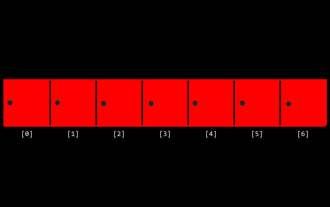
Algorithms are the set of instructions to solve problems, and their execution speed and memory usage vary. In programming, many algorithms are based on data search and sorting. This article will introduce several data retrieval and sorting algorithms. Linear search assumes that there is an array [20,500,10,5,100,1,50] and needs to find the number 50. The linear search algorithm checks each element in the array one by one until the target value is found or the complete array is traversed. The algorithm flowchart is as follows: The pseudo-code for linear search is as follows: Check each element: If the target value is found: Return true Return false C language implementation: #include#includeintmain(void){i
 How to output a countdown in C language
Apr 04, 2025 am 08:54 AM
How to output a countdown in C language
Apr 04, 2025 am 08:54 AM
How to output a countdown in C? Answer: Use loop statements. Steps: 1. Define the variable n and store the countdown number to output; 2. Use the while loop to continuously print n until n is less than 1; 3. In the loop body, print out the value of n; 4. At the end of the loop, subtract n by 1 to output the next smaller reciprocal.
 C language data structure: the key role of data structures in artificial intelligence
Apr 04, 2025 am 10:45 AM
C language data structure: the key role of data structures in artificial intelligence
Apr 04, 2025 am 10:45 AM
C Language Data Structure: Overview of the Key Role of Data Structure in Artificial Intelligence In the field of artificial intelligence, data structures are crucial to processing large amounts of data. Data structures provide an effective way to organize and manage data, optimize algorithms and improve program efficiency. Common data structures Commonly used data structures in C language include: arrays: a set of consecutively stored data items with the same type. Structure: A data type that organizes different types of data together and gives them a name. Linked List: A linear data structure in which data items are connected together by pointers. Stack: Data structure that follows the last-in first-out (LIFO) principle. Queue: Data structure that follows the first-in first-out (FIFO) principle. Practical case: Adjacent table in graph theory is artificial intelligence
 Troubleshooting tips for processing files in C language
Apr 04, 2025 am 11:15 AM
Troubleshooting tips for processing files in C language
Apr 04, 2025 am 11:15 AM
Troubleshooting Tips for C language processing files When processing files in C language, you may encounter various problems. The following are common problems and corresponding solutions: Problem 1: Cannot open the file code: FILE*fp=fopen("myfile.txt","r");if(fp==NULL){//File opening failed} Reason: File path error File does not exist without file read permission Solution: Check the file path to ensure that the file has check file permission problem 2: File reading failed code: charbuffer[100];size_tread_bytes=fread(buffer,1,siz
 Integers in C: a little history
Apr 04, 2025 am 06:09 AM
Integers in C: a little history
Apr 04, 2025 am 06:09 AM
Integers are the most basic data type in programming and can be regarded as the cornerstone of programming. The job of a programmer is to give these numbers meanings. No matter how complex the software is, it ultimately comes down to integer operations, because the processor only understands integers. To represent negative numbers, we introduced two's complement; to represent decimal numbers, we created scientific notation, so there are floating-point numbers. But in the final analysis, everything is still inseparable from 0 and 1. A brief history of integers In C, int is almost the default type. Although the compiler may issue a warning, in many cases you can still write code like this: main(void){return0;} From a technical point of view, this is equivalent to the following code: intmain(void){return0;}
