


MIT Media Lab To Put Human Flourishing At The Heart Of AI R&D


A recent report from Elon University’s Imagining The Digital Future Center surveyed nearly 300 global technology experts. The resulting report, ‘Being Human in 2035’, concluded that most are concerned that the deepening adoption of AI systems over the next decade will negatively alter how humans think, feel, act and relate to one another.
MIT Media Lab is trying to answer a similarly alarming issue: how can AI support, rather than replace, human flourishing?
It is the central question of the Lab’s newly launched Advancing Humans with AI (AHA) program.
Heralded as a bold, multi-year initiative not to just improve AI, but to elevate human flourishing in an AI-saturated world, a star-studded symposium kicked off the concept and the different research domains it will tackle. Speakers included Arianna Huffington who spoke of AI being like a ‘GPS for the soul’, and Tristan Harris who warned about systems exploiting human vulnerabilities under the guise of assistance. Both agreed that AI shouldn’t just be optimized for efficiency rather it should be designed to cultivate wisdom, resilience, and reflection.
This echoed AHA’s deeper vision to reorient AI development around designing for the human interior, the parts of us that make life worth living but often get left out of technical design conversations.
Pat Pataranutaporn, co-lead of the AHA program, summed this up to the assembled audience, asking, ”What is the point of advancing artificial intelligence if we simultaneously devalue human intelligence and undermine human dignity? Instead, we should strive to design AI systems that amplify and enhance our most deeply human qualities”
The Missing Research Layer in AI
While safety and alignment dominate AI ethics debates, AHA concerns itself with longer-term human outcomes, as woven through the sections of the event which covered Interior Life, Social Life, Vocational Life, Cerebral Life and Creative Life.
From over-reliance and skill atrophy to growing emotional attachment and isolation, people are already reshaping their lives around AI. But few research efforts are dedicated to systematically understanding these changes, let alone designing AI to mitigate them. AHA aims to do just that. The initiative is grounded in six research domains:
- Comprehension & Agency: AI systems that support, rather than replace, critical thinking and reasoning.
- Mental & Physical Wellbeing: Tools that enhance long-term health, and deliver personlized support.
- Curiosity & Learning: Adaptive learning that sparks exploration for each person’s learning journey
- Creativity & Expression: Systems that amplify human agency and expression, rather than homogenize it.
- Sense of Purpose: AI that helps people reflect, plan, and align their values and goals whilst contributing to society.
- Healthy Social Lives: AI that strengthens authentic human connection rather than diminishing it.
A Moonshot Mindset
The ambition of AHA is matched by its moonshot projects. These include:
- The Atlas of Human-AI Interaction: Advancing a comprehensive database mapping of how humans relate to AI across contexts. A prototype has been mapping papers on human-AI interaction to identify positive outcomes.
- Benchmarks for Human Flourishing: This will develop a series of benchmarks that provide rigorous metrics and assessment frameworks to measure how AI systems contribute to human flourishing across cognitive, emotional, and social dimensions. A workshop on September 17 and 18 at the Media Lab will invite experts to begin the design of benchmarks.
- The Global Observatory for AI Impact: An observatory for tracking the emotional, cognitive, and social effects of AI adoption around the world, allowing for large scale randomized experiments into how people are responding to AI across different countries or locations.
The message is clear: it’s time to measure the wellbeing of humans not just the performance of machines.
Why Now?
As AI becomes increasingly embedded in health, education, work, and social life, the choices made by engineers and designers today will shape cognitive habits, emotional norms, and social structures for decades.
Yet, as AHA’s contributors pointed out throughout the symposium, AI is still mostly optimized for business metrics and safety concerns rather than for psychological nuance, emotional growth, or long-term well-being.
MIT’s AHA initiative is not a critique of AI. It’s a call to design better, to design not just smarter machines, but systems that reflect us as our best selves.
As Professor Pattie Maes, co-lead of the AHA program and director of the Fluid Interfaces group, told me after the event, ‘We are creating AI and AI in turn will shape us. We don’t want to make the same mistakes we made with social media. It is critical that we think of AI as not just a technical problem for engineers and entrepreneurs to solve, but also as a human design problem, requiring the expertise from human-computer interaction designers, psychologists, and social scientists for AI to lead to beneficial impact on the human experience.’
The above is the detailed content of MIT Media Lab To Put Human Flourishing At The Heart Of AI R&D. For more information, please follow other related articles on the PHP Chinese website!

Hot AI Tools

Undresser.AI Undress
AI-powered app for creating realistic nude photos

AI Clothes Remover
Online AI tool for removing clothes from photos.

Undress AI Tool
Undress images for free

Clothoff.io
AI clothes remover

AI Hentai Generator
Generate AI Hentai for free.

Hot Article
Hot Tools

Notepad++7.3.1
Easy-to-use and free code editor

SublimeText3 Chinese version
Chinese version, very easy to use

Zend Studio 13.0.1
Powerful PHP integrated development environment

Dreamweaver CS6
Visual web development tools

SublimeText3 Mac version
God-level code editing software (SublimeText3)
Hot Topics
 1379
1379
 52
52

 I Tried Vibe Coding with Cursor AI and It's Amazing!
Mar 20, 2025 pm 03:34 PM
I Tried Vibe Coding with Cursor AI and It's Amazing!
Mar 20, 2025 pm 03:34 PM
Vibe coding is reshaping the world of software development by letting us create applications using natural language instead of endless lines of code. Inspired by visionaries like Andrej Karpathy, this innovative approach lets dev
 Top 5 GenAI Launches of February 2025: GPT-4.5, Grok-3 & More!
Mar 22, 2025 am 10:58 AM
Top 5 GenAI Launches of February 2025: GPT-4.5, Grok-3 & More!
Mar 22, 2025 am 10:58 AM
February 2025 has been yet another game-changing month for generative AI, bringing us some of the most anticipated model upgrades and groundbreaking new features. From xAI’s Grok 3 and Anthropic’s Claude 3.7 Sonnet, to OpenAI’s G
 How to Use YOLO v12 for Object Detection?
Mar 22, 2025 am 11:07 AM
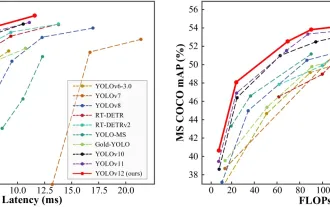
How to Use YOLO v12 for Object Detection?
Mar 22, 2025 am 11:07 AM
YOLO (You Only Look Once) has been a leading real-time object detection framework, with each iteration improving upon the previous versions. The latest version YOLO v12 introduces advancements that significantly enhance accuracy
 Best AI Art Generators (Free & Paid) for Creative Projects
Apr 02, 2025 pm 06:10 PM
Best AI Art Generators (Free & Paid) for Creative Projects
Apr 02, 2025 pm 06:10 PM
The article reviews top AI art generators, discussing their features, suitability for creative projects, and value. It highlights Midjourney as the best value for professionals and recommends DALL-E 2 for high-quality, customizable art.
 Is ChatGPT 4 O available?
Mar 28, 2025 pm 05:29 PM
Is ChatGPT 4 O available?
Mar 28, 2025 pm 05:29 PM
ChatGPT 4 is currently available and widely used, demonstrating significant improvements in understanding context and generating coherent responses compared to its predecessors like ChatGPT 3.5. Future developments may include more personalized interactions and real-time data processing capabilities, further enhancing its potential for various applications.
 Which AI is better than ChatGPT?
Mar 18, 2025 pm 06:05 PM
Which AI is better than ChatGPT?
Mar 18, 2025 pm 06:05 PM
The article discusses AI models surpassing ChatGPT, like LaMDA, LLaMA, and Grok, highlighting their advantages in accuracy, understanding, and industry impact.(159 characters)
 How to Use Mistral OCR for Your Next RAG Model
Mar 21, 2025 am 11:11 AM
How to Use Mistral OCR for Your Next RAG Model
Mar 21, 2025 am 11:11 AM
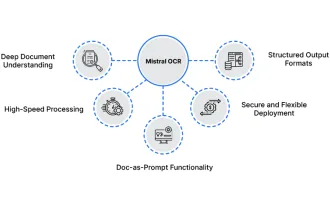
Mistral OCR: Revolutionizing Retrieval-Augmented Generation with Multimodal Document Understanding Retrieval-Augmented Generation (RAG) systems have significantly advanced AI capabilities, enabling access to vast data stores for more informed respons
 Top AI Writing Assistants to Boost Your Content Creation
Apr 02, 2025 pm 06:11 PM
Top AI Writing Assistants to Boost Your Content Creation
Apr 02, 2025 pm 06:11 PM
The article discusses top AI writing assistants like Grammarly, Jasper, Copy.ai, Writesonic, and Rytr, focusing on their unique features for content creation. It argues that Jasper excels in SEO optimization, while AI tools help maintain tone consist
